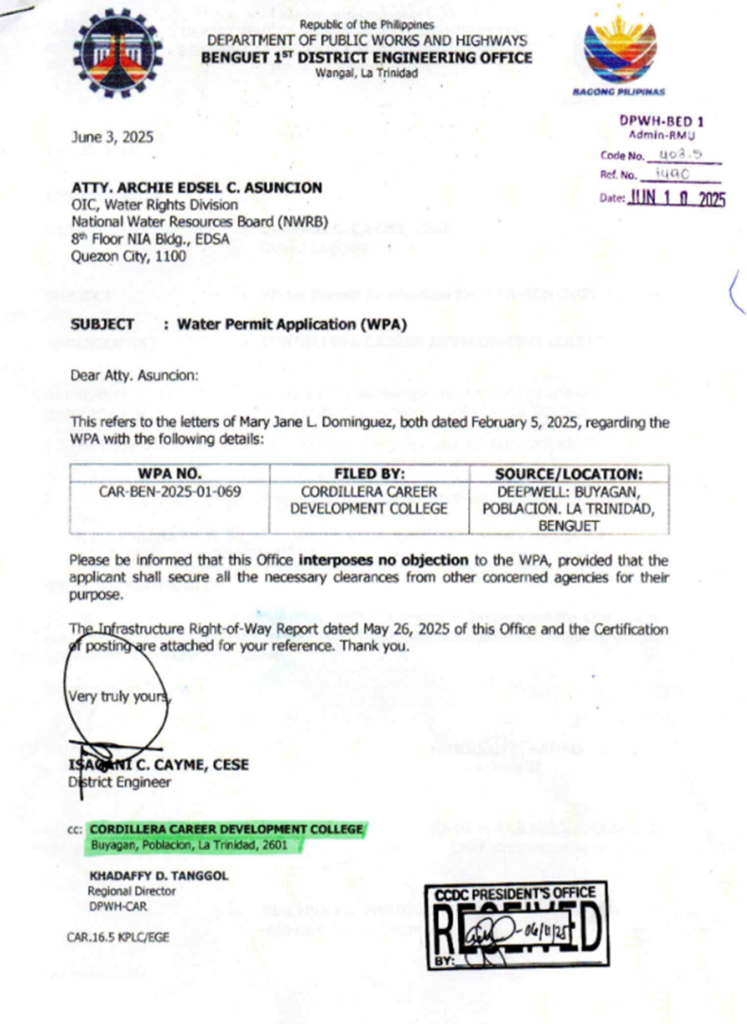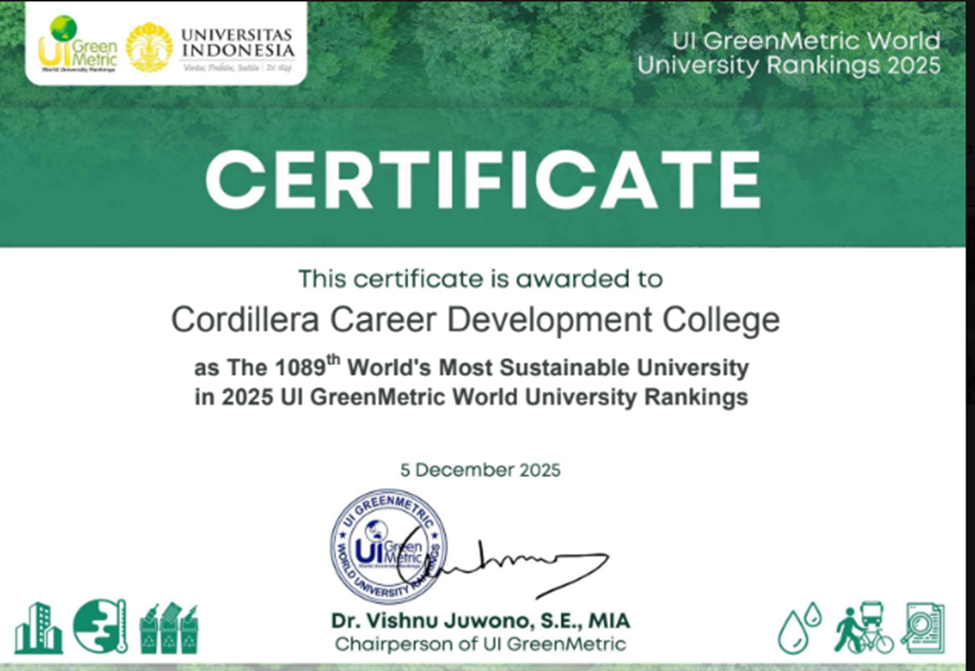

Cordillera Career Development College (CCDC) recognizes that water security requires coordinated action among educational institutions, local government units, regional and national government agencies, communities, and international partners. Through its campus water management practices, environmental compliance efforts, and commitment to sustainability, the College contributes to broader initiatives to protect water resources, prevent pollution, and promote the responsible use of water.
Cooperation with Local Governments and Communities
CCDC supports local efforts to promote water conservation, proper sanitation, and environmental protection through responsible campus operations and awareness initiatives. Its practices in rainwater harvesting, water reuse, wastewater management, and pollution prevention complement broader community efforts to safeguard water resources. The College recognizes the importance of working with local government units and community stakeholders to address water-related concerns and encourage responsible water use.
The CCDC academic community also takes active part in cleaning waterways, information and dissemination campaigns for clean water.
Engagement with Regional and National Government Agencies
CCDC coordinates with relevant government agencies on water quality monitoring, wastewater management, hazardous waste management, and environmental regulatory compliance. Through its designated Pollution Control Officer, James K. Fernando, the College regularly submits its quarterly Self-Monitoring Report (SMR) to the Department of Environment and Natural Resources (DENR), supporting the monitoring and documentation of its environmental performance.
The College also maintains hazardous waste generator registration with the DENR–Environmental Management Bureau (EMB) and engages an authorized service provider for the transport of regulated hazardous wastes to an appropriate treatment, storage, and disposal facility. These arrangements support the responsible management of potentially polluting substances and help reduce the risk of contamination affecting water resources.
In accordance with the objectives of the Philippine Clean Water Act of 2004 (Republic Act No. 9275), CCDC implements wastewater management measures through its sewage treatment plant, including inspection, maintenance, and desludging. Accumulated septage is transported by an authorized service provider to an appropriate treatment facility. The College has also initiated the development of its own sewage treatment facility, with construction commencing in 2025, to strengthen its long-term wastewater management capacity.
Contribution to Regional Water Security
Located in the Cordillera region, CCDC recognizes the importance of responsible water management in protecting local water resources and supporting community resilience. Its rainwater harvesting systems, water-efficient fixtures, groundwater management practices, and maintenance of permeable ground areas contribute to water conservation and sustainable campus operations. These initiatives complement wider efforts to improve water-use efficiency, manage stormwater, and prevent pollutants from entering natural water systems.
Alignment with Global Water Security Goals
At the global level, CCDC supports the objectives of Sustainable Development Goal 6 (SDG 6): Clean Water and Sanitation, particularly the availability and sustainable management of water and sanitation for all. Through responsible water consumption, rainwater reuse, wastewater management, pollution prevention, and environmental awareness, the College translates these sustainability principles into campus practices.
CCDC recognizes that global water security depends on cooperation across institutions, communities, and levels of government. While its documented initiatives primarily demonstrate institutional action and engagement with Philippine environmental regulatory agencies, these efforts contribute to the broader shared responsibility of conserving water resources and protecting public health.
Through continued environmental management, regulatory coordination, and sustainable water practices, CCDC seeks to strengthen water security, reduce pollution risks, and support the long-term protection of water resources for present and future generations.