

Organizational Structure
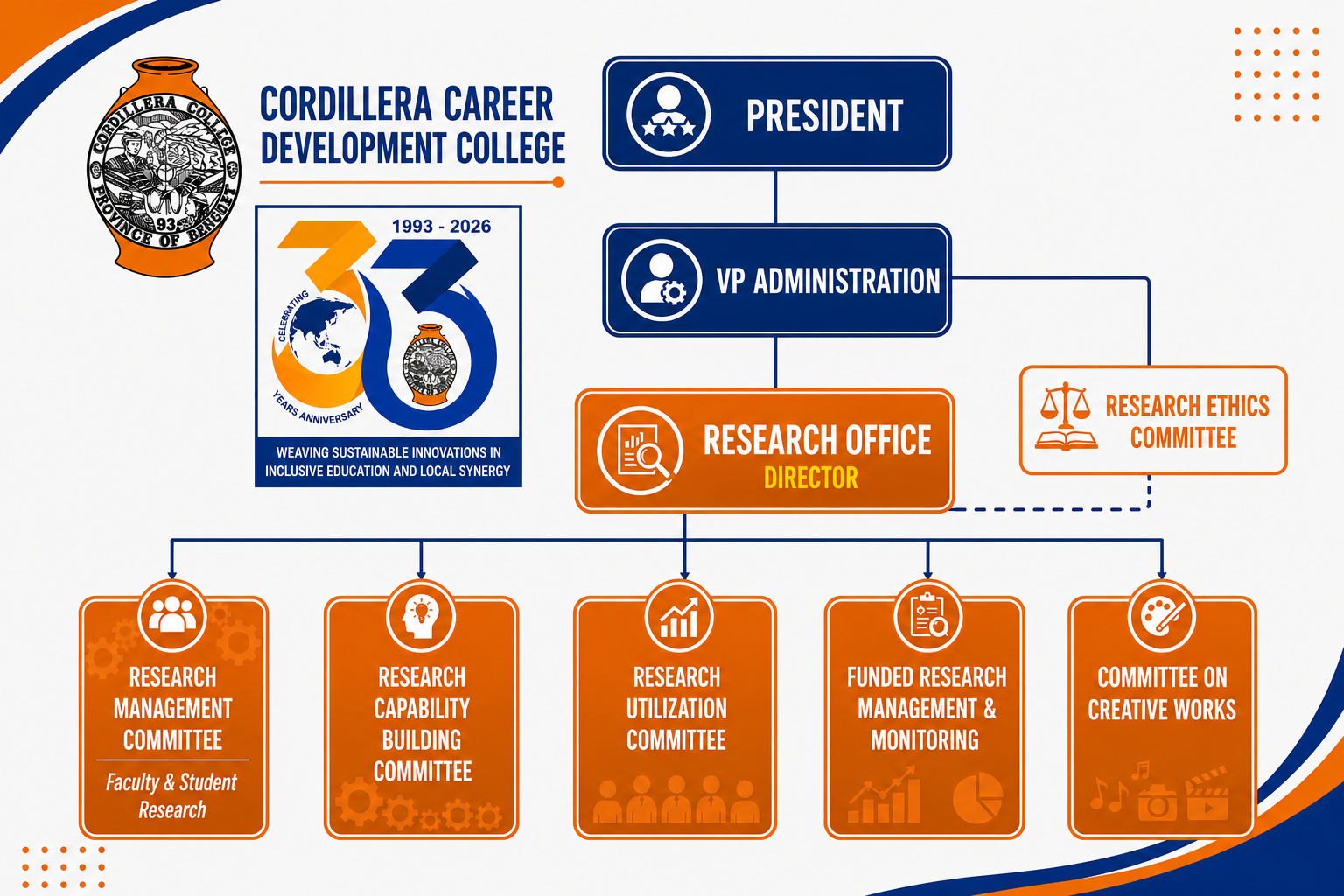
Brief History
On April 6, 1993, The Cordillera Career Development College (CCDC) was registered with the Security and Exchange Commission-Baguio Branch. Initially, CCDC was envisioned to be a pre-elementary, review and modular computer center, so the focus was on skills development. However, as additional programs were offered, instruction and research were seen as equally important. On April 16, 2002, the Office of Research, Development and Extension, is hereby created primarily to look into the following programs and prospects, the Office is headed by a director:
- publication of a Research Journal;
- level 1 accreditation of the Liberal Arts, Education, Commerce, Criminology and Midwifery programs;
- coordinate with the Director of Student Affairs, in strengthening the College Extension Services; and
- other functions that may be assigned from time to time by the College President.
On June 1, 2004, the Research, Development and Extension Office was abolished. It was assigned under the direct supervision and administration of the Vice-President for Academic Affairs. In 2008, College Memorandum No. 3, s. Nov. 2008 was released approving the establishment of the Indigenous People’s Institute (IPI), which would become the main Research and Extension arm of CCDC. The IPI is under the direct supervision of the Director for IPI and Research. On May 24, 2012, College Memorandum No. 1, s. May 24, 2012, was issued, changing the title “Director” to “Coordinator.” In the succeeding years, the designation reverted to “Director” to reflect the evolving functions and responsibilities of the office.
In 2023, the Research Office was further enhanced with the creation of specialized research committees (College Memo No. 2, s. January 17,2023) aimed at strengthening and ensuring the smooth implementation of quality research activities. These committees include the Research Capability Building Committee, Research Management Committee, Research Utilization Committee and Research Ethics Committee.
In 2024, the Funded Research Monitoring Committee was added to monitor and evaluate the progress and outcomes of externally and internally funded research projects. (CMO. 3 s. September 11, 2024)
Continuing its commitment to research excellence and development,in 2025, the institution formulated and implemented guidelines for the establishment and utilization of research units for faculty members to provide a more conducive and collaborative environment for research productivity and innovation.
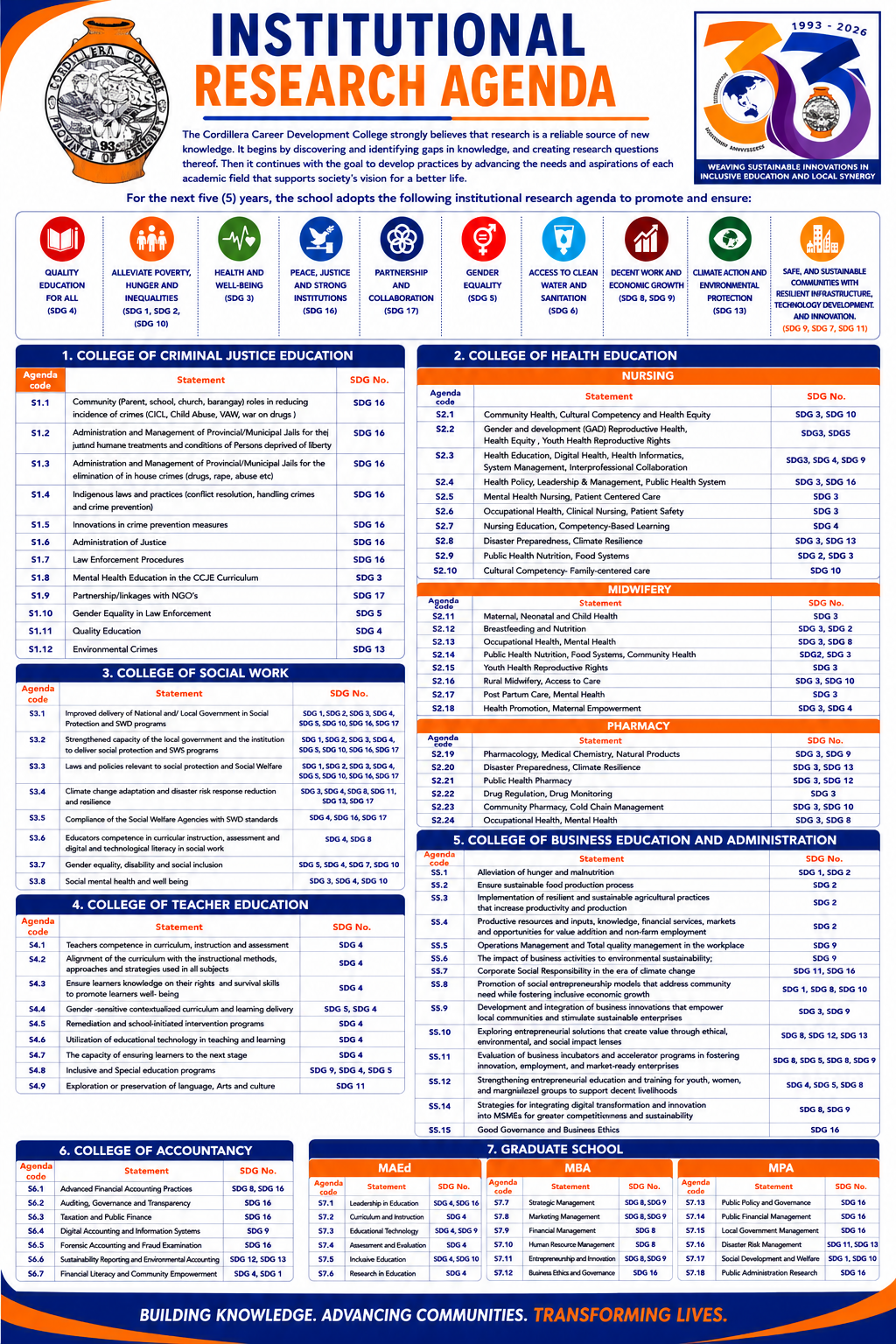
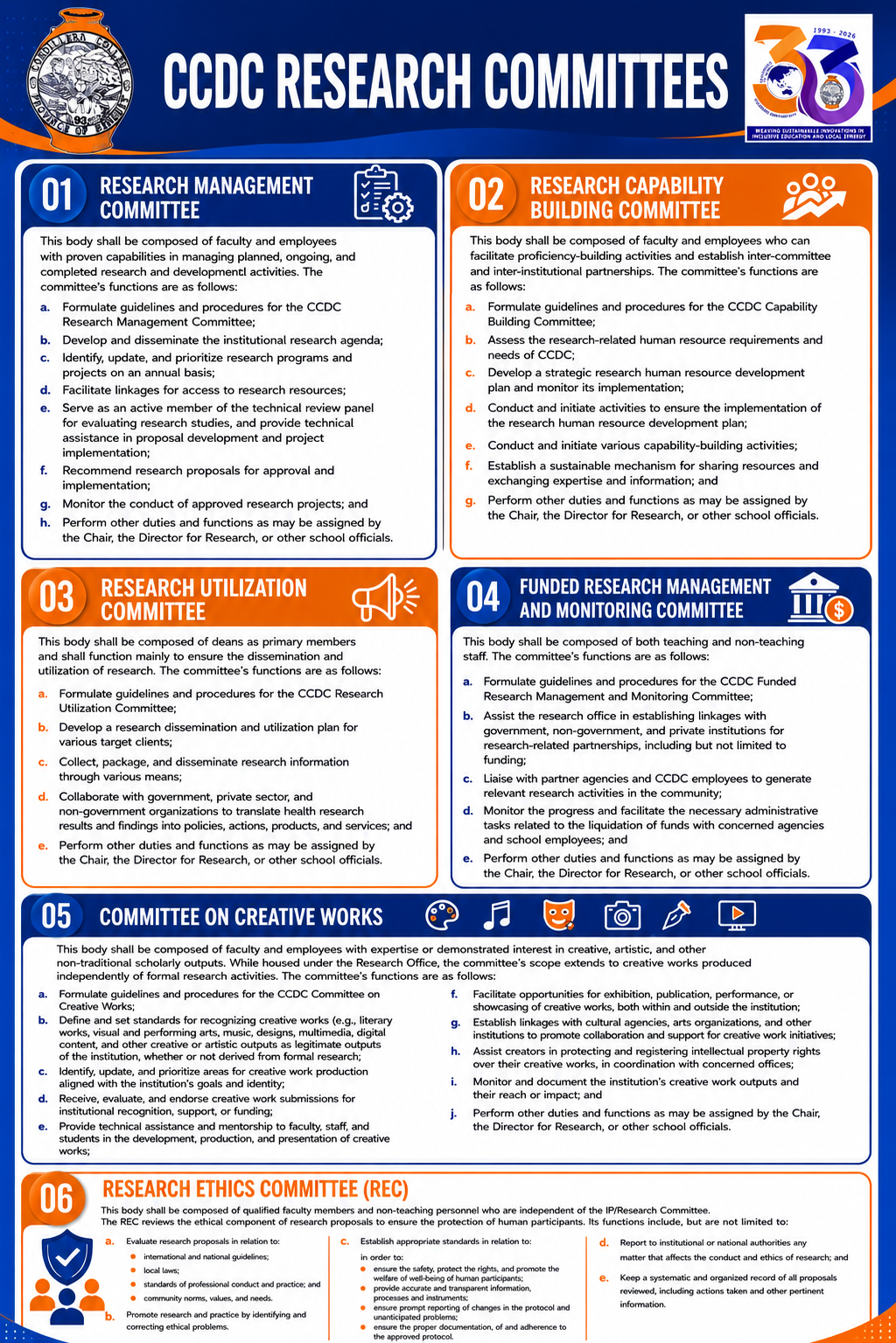
Accomplishments or Activities
Research Activities
3rd Research Colloquium Highlights Student Research, Innovation, and Scholarly Excellence
The 3rd Research Colloquium was held on March 26, 2026, at SYS Hall and Iyaman Hall, bringing together student researchers, faculty members, evaluators, and members of the academic community to celebrate research and innovation.
Anchored on the theme, “Weaving Sustainable Innovation by Providing Sustainable Innovation in Inclusive Education and Local Synergy,” the event provided students with an avenue to present their completed research studies, share their findings, and engage in meaningful academic exchange.
Eight (8) selected student research studies were presented through oral presentations, while seven (7) groups participated in the poster competition, marking the successful introduction of the poster presentation category. The event was further strengthened by the participation of external evaluators from Easter Colleges, Inc., Benguet State University, and the University of Baguio, who provided valuable insights and constructive feedback to the student researchers.
Outstanding research outputs were recognized through the Best Research Paper and Best Oral Presentation awards. Beyond recognition, the colloquium provided students with opportunities to enhance their public speaking, critical thinking, analytical, visual communication, and technical skills.
Overall, the activity helped strengthen the institution’s research culture and encouraged students to pursue meaningful research that promotes innovation, collaboration, and sustainable impact.
2nd Research Colloquium Fosters Student Inquiry and Community-Rooted Research
The 2nd Research Colloquium, held on October 10, 2025, brought together 437 students in an academic gathering that celebrated student research, inquiry, and innovation.
The event provided students with an opportunity to present their completed research studies, exchange ideas, and receive meaningful feedback from fellow students and members of the academic community.
More than a venue for research presentations, the colloquium encouraged students to explore relevant issues and develop research that responds to the needs of communities and society. The studies presented covered diverse areas, including mental health support, pedagogical strategies, food science, social work pathways, and caregiving experiences, reflecting the students’ efforts to address real-world concerns through research.
The activity also highlighted the institution’s commitment to the United Nations Sustainable Development Goals (SDGs), particularly Quality Education (SDG 4), Industry, Innovation and Infrastructure (SDG 9), and Partnerships for the Goals (SDG 17).
Through the colloquium, students strengthened their research competencies while contributing to a culture of authentic inquiry, innovation, and community-rooted research. The successful conduct of the 2nd Research Colloquium reaffirmed the institution’s commitment to nurturing student researchers and promoting research that contributes to academic excellence and meaningful community and national development.
1st CCDC Research Colloquium Highlights the Value of Research and Innovation
The 1st CCDC Research Colloquium, held on March 14, 2025, provided students and researchers with an avenue to present their work, exchange ideas, and explore how research can contribute to addressing real-world challenges.
As part of the institution’s commitment to research excellence and utilization, the colloquium emphasized the importance of transforming academic findings into meaningful applications that can benefit communities and enhance educational outcomes.
The activity fostered scholarly exchange and highlighted the role of research in advancing knowledge, innovation, and problem-solving. The successful conduct of the colloquium reflected CCDC’s continuing commitment to strengthening its research culture and encouraging students and researchers to pursue relevant and impactful research.
Research Symposium Strengthens Faculty Mentorship and Research Publication
Faculty members came together on March 14, 2025, for a Research Symposium focused on strengthening research mentorship and supporting students in producing and publishing quality research.
The activity recognized the important roles of research advisers, data analysts, and editors in guiding students throughout their research journey.
The symposium provided a platform for participants to exchange insights on research mentoring, manuscript writing, publication initiatives, institutional support, and collaborative opportunities. Discussions also highlighted the importance of identifying relevant community issues as potential research topics and understanding proper practices in preparing manuscripts for publication.
Through the activity, participants gained a deeper appreciation of the importance of research publication and effective mentorship. The symposium further encouraged faculty members to become active research mentors and contribute to a stronger culture of research, collaboration, and knowledge sharing within the academic community.
Extension Activities
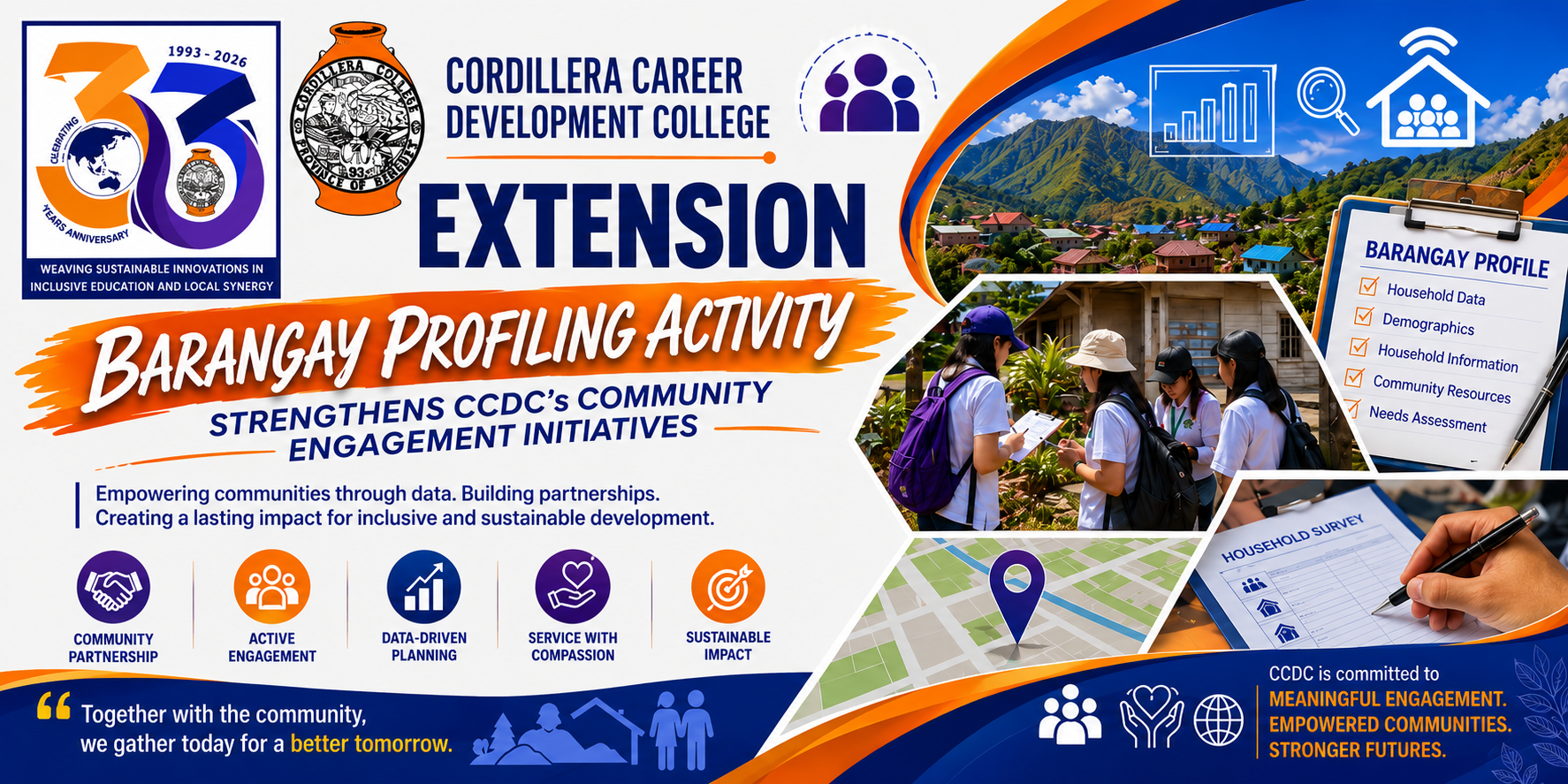
Barangay Profiling Activity Strengthens CCDC’s Community Engagement Initiatives
As part of the CUBE partnership with the Municipality of Atok, Cordillera Career Development College (CCDC), through selected students from the Nursing, Social Work, and CCJE programs and their clinical instructors, conducted a Barangay Profiling Activity in Barangay Caliking, Atok, Benguet.
The activity aimed to gather baseline demographic data to support the proposed Needs Assessment Study and assist the barangay in community planning and population data management.
A total of 22 students and two (2) faculty and staff members participated in the activity. Through direct engagement with the community, the students gained valuable hands-on experience in data gathering and interviewing while strengthening their appreciation for civic engagement, interdisciplinary collaboration, and social responsibility.
The activity reflects CCDC’s commitment to meaningful community engagement and extension initiatives that promote evidence-based and responsive community development.