
By Solomon Sagandoy
At Cordillera Career Development College (CCDC), supporting women’s access to education goes beyond providing opportunities for admission. It also means helping women address financial, academic, and personal challenges that may affect their participation and success.
Guided by its institutional mission of Bringing Education Closer to the People, CCDC provides scholarships, mentoring, guidance and counseling, and complementary initiatives promoting student well-being, gender awareness, and inclusive learning.
These efforts help create an educational environment where women can pursue their academic goals, seek assistance when difficulties arise, and participate meaningfully in college life.
A Culture of Care: Mentoring, Guidance, and Counseling
Recognizing that academic success is influenced by students’ personal, emotional, and social circumstances, CCDC provides mentoring and counseling mechanisms intended to help learners overcome challenges and continue their education.
One of these initiatives is Project Ayowan, established on April 26, 2023. The program takes its name from the Kankana-ey word ayowan, meaning care, and brings together volunteer mentors from the College’s teaching and non-teaching personnel.
The program provides academic tutorials, academic counseling, talk therapy, facilitated parent–student sessions, and follow-up support. Licensed counselors are engaged when concerns require specialized assistance.
Within six months of its establishment, Project Ayowan had engaged 15 volunteer mentors and served 524 students. These historical figures cover students of all genders.
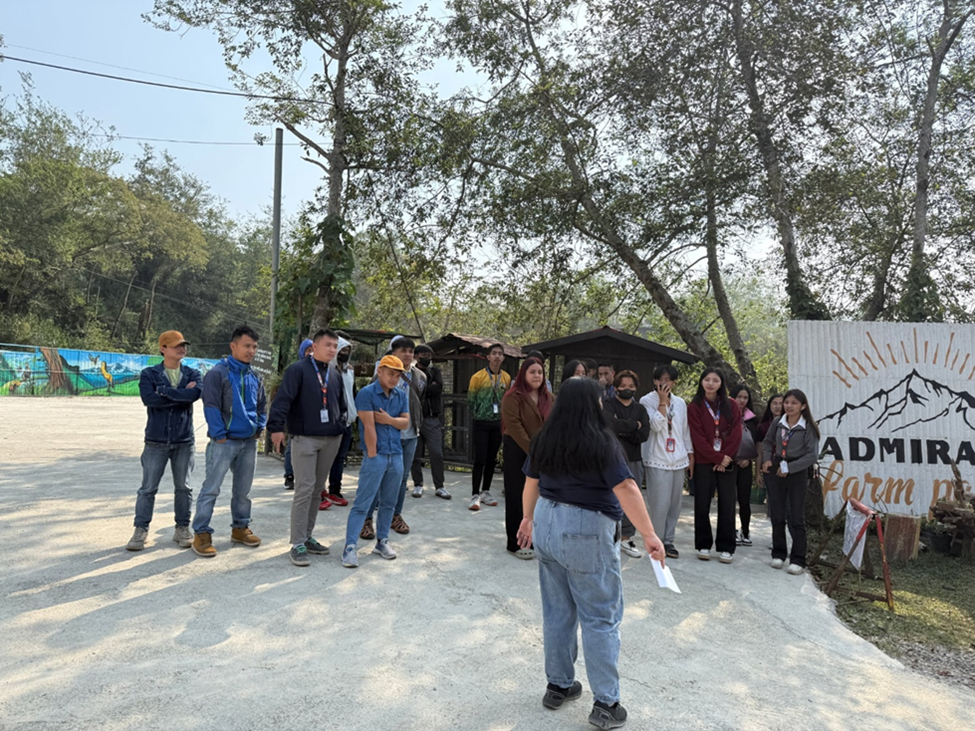
Complementing Project Ayowan, the College’s Guidance Services provide counseling, initial assessments, external referrals, intake interviews, conferences, follow-up assistance, and other interventions responsive to student needs.
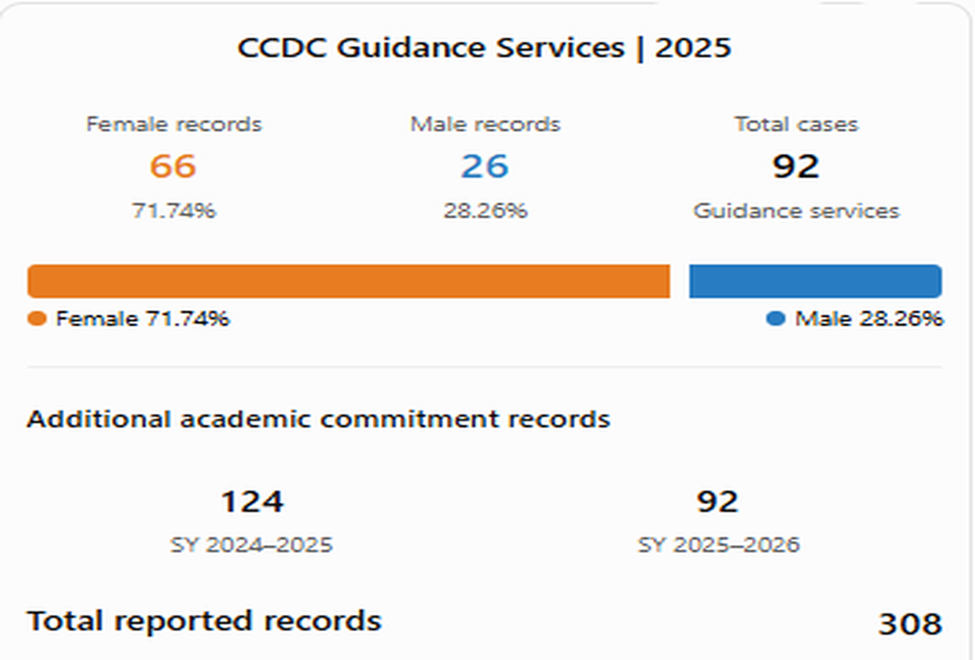
According to the CCDC Guidance Services Report for January–December 2025, the College documented 92 guidance service records, comprising 66 female records (71.74%) and 26 male records (28.26%).
These figures indicate that female students accounted for more than seven out of every ten recorded cases or service records in the sex-disaggregated guidance category.
The Guidance Office also documented 124 academic commitment records for SY 2024–2025 and 92 records for SY 2025–2026, involving students with failing grades before enrollment. These processes provide opportunities to address academic difficulties and reinforce students’ responsibilities toward academic improvement.
Across the three reported categories, CCDC documented 308 guidance-related and academic commitment records during the reporting period.
Guidance Services and Female Student Participation, January–December 2025
The data demonstrate women’s actual use of available guidance and counseling services. These provisions are significant because academic difficulties, emotional concerns, and personal circumstances can affect students’ continued educational participation. Together, these services demonstrate CCDC’s effort to make academic, personal, and emotional support accessible to female learners, contributing to an educational environment that promotes their continued participation and well-being.
Removing Financial Barriers: Scholarships and Educational Assistance
Financial constraints remain among the challenges that can affect students’ ability to enter, continue, or complete higher education. To address these concerns, CCDC facilitates access to external scholarships, government-supported grants, and institutionally administered financial assistance programs.
Based on the College’s Data on Scholars, January–December 2025, CCDC recorded 4,205 scholarship and financial assistance beneficiary records, comprising 2,179 female records (51.82%) and 2,026 male records (48.18%).
The College reported 3,572 external scholarship and grant beneficiary records, of which 1,892 were female, representing 52.97%. Major programs included the CHED Tertiary Education Subsidy (TES), with 682 female beneficiary records, and the CHED Tulong Dunong Program (TDP-TES), with 1,111 female records.
Other external programs included the Private Education Student Financial Assistance (PESFA), Benguet Provincial Scholars, and educational grants from partner agencies and organizations.
CCDC also maintains institutional scholarships and financial assistance through student assistantships, academic scholarships, varsity and sports scholarships, presidential scholarships, employee educational benefits, employee-dependent benefits, alumni discounts, student leadership, campus publication participation, and performing arts programs.
In 2025, the College reported 287 female beneficiary records among 633 internal scholarship and grant records, equivalent to 45.34%.
Sholarship and Financial Assistance Beneficiaries by Sex, January–December 2025
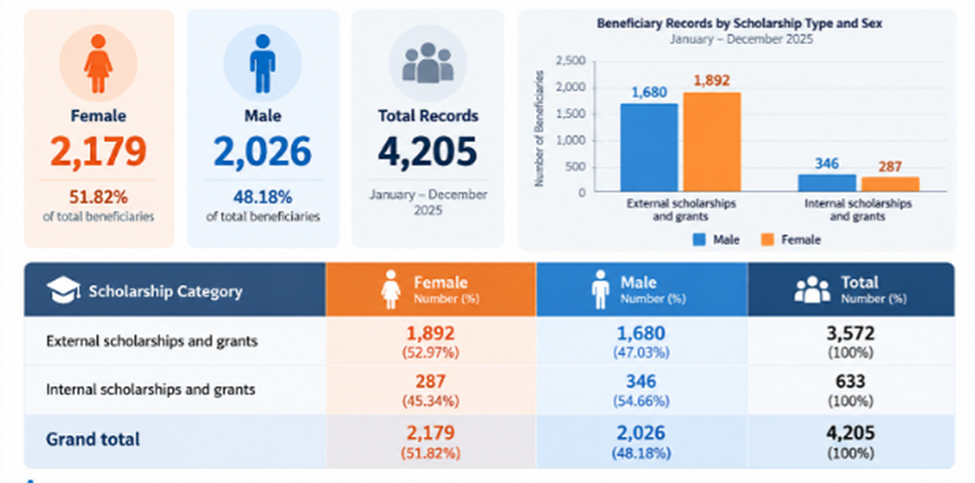
The data demonstrate substantial female participation in CCDC’s financial assistance programs. Female beneficiary records exceeded male records in external scholarships, while male records were slightly higher in internal scholarship schemes.
CCDC’s scholarship initiatives also encourage recipients to contribute to the wider community. In an earlier outreach activity, CHED Tertiary Education Subsidy grantees distributed educational materials and school supplies to elementary pupils, demonstrating how beneficiaries can extend the value of educational assistance beyond their own studies.
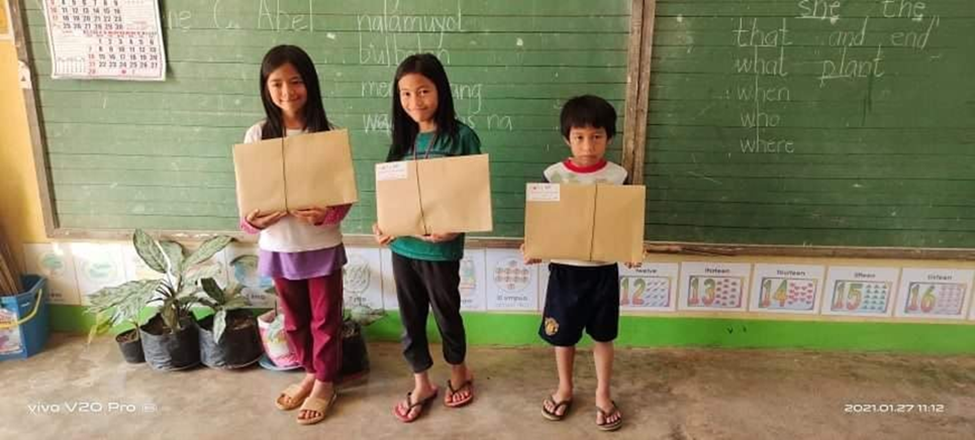
CCDC supports students with varying economic circumstances, academic achievements, and institutional involvement by maintaining multiple financial assistance schemes. These opportunities help reduce financial barriers that could otherwise affect women’s continued participation in higher education.
Promoting Inclusive Opportunities Across Academic Programs
Cordillera Career Development College (CCDC) recognizes that advancing women’s access to higher education extends beyond admission and enrollment. It also involves creating opportunities for women to pursue academic disciplines and professional careers historically associated with male participation. Through inclusive educational practices, career guidance, mentoring, and student support services, the College encourages female learners to select academic and professional pathways based on their interests, abilities, and aspirations rather than traditional gender expectations.
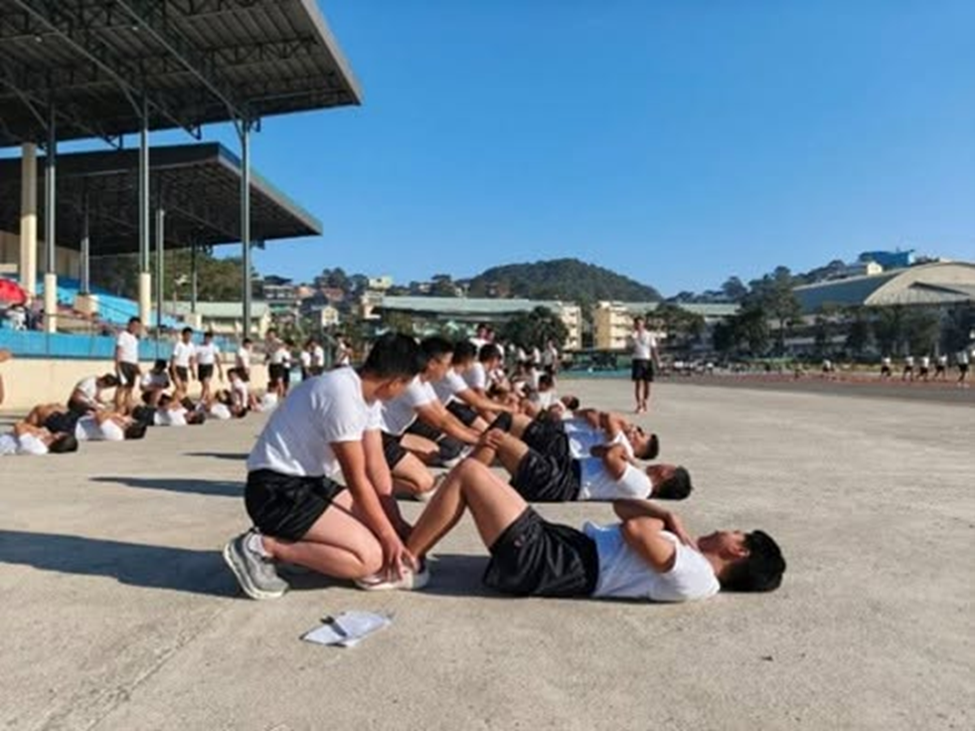
One example is the Bachelor of Science in Criminology program offered through the College of Criminal Justice Education (CCJE). Although law enforcement and criminal justice have traditionally been male-dominated fields, CCDC promotes opportunities for female students to participate in criminology education, practical training, and professional preparation.
In the College’s feature article, Breaking Barriers: How CCDC Empowers Women in Male-Dominated Fields, Dean Dennis M. Butag of the College of Criminal Justice Education highlighted the increasing participation of women in the Criminology program and their progress toward degree completion. These developments reflect the growing opportunities available to female learners pursuing careers in criminal justice and law enforcement.
CCDC further supports women’s participation through career guidance and outreach initiatives that introduce prospective students to different academic programs and professional opportunities. Such initiatives help challenge traditional perceptions of gender-specific occupations and encourage young women to consider careers in fields where they have historically been underrepresented.
Beyond academic access, the College recognizes the importance of maintaining a supportive and inclusive learning environment. Its academic advising, mentoring, guidance, and counseling services provide assistance to students experiencing academic, personal, or adjustment-related challenges. These services complement institutional policies on gender equality, non-discrimination, and protection against harassment.
Learning with Respect: Gender Sensitivity and Inclusive Professional Preparation
Beyond direct mentoring and financial assistance, CCDC recognizes that respectful and gender-responsive learning environments can contribute to women’s educational participation.
On July 9, 2026, third-year Bachelor of Science in Social Work students participated in the Gender Sensitivity Seminar: Preparing Future Social Work Practitioners for Gender-Responsive and Inclusive Practice.
The seminar emphasized the importance of gender sensitivity in preparing future social workers to engage with individuals, families, and communities experiencing different social circumstances.
By strengthening awareness of gender-related concerns, the activity encouraged future professionals to uphold dignity, equity, and inclusive practice.
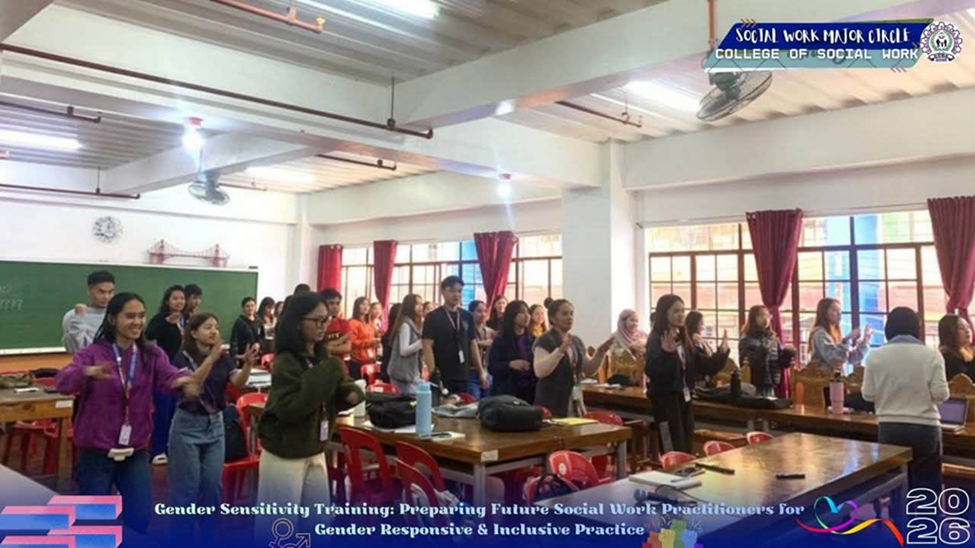
The activity complements CCDC’s women’s access initiatives by helping cultivate an academic environment where students are encouraged to recognize gender-related issues and participate in respectful learning and professional preparation.
Supporting Well-Being: Sexual Health Education and Safe Spaces
CCDC’s approach to inclusive education also recognizes the importance of health awareness, personal safety, and student well-being.
Through SHAPE | SUPPORT | SAFE: Empowering Youth for Sexual Health and Well-being, students are encouraged to develop informed perspectives on sexual health, mutual support, and safe spaces for learning and participation.
The initiative complements institutional support services by promoting awareness and encouraging responsible decisions about personal well-being and respectful interactions.
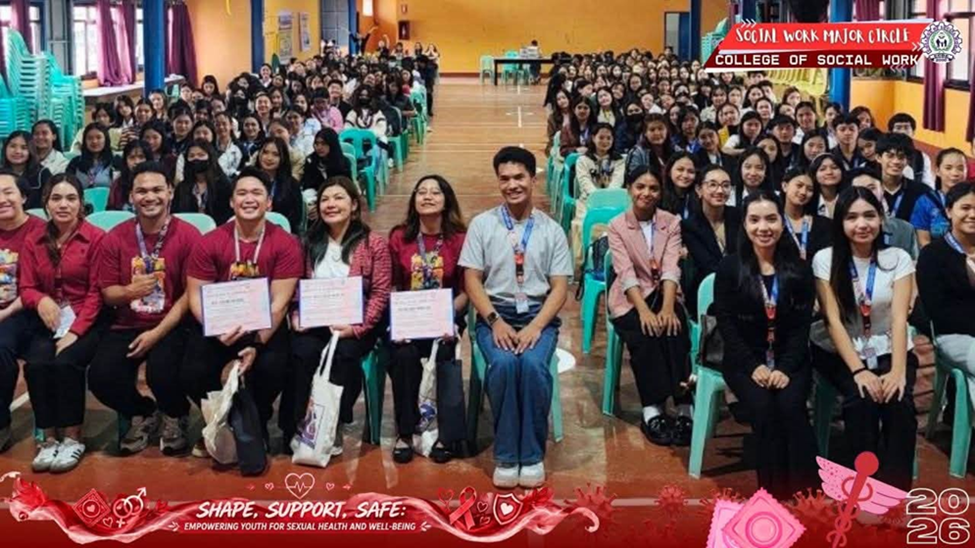
These activities contribute to a supportive academic environment by encouraging students to develop awareness of personal health, safety, and responsible participation.
Giving Students a Voice: Standing Against Discrimination and Harassment
Promoting inclusive education also involves strengthening awareness of discrimination, bullying, online harassment, and other behaviors that may discourage students from participating fully in school life.
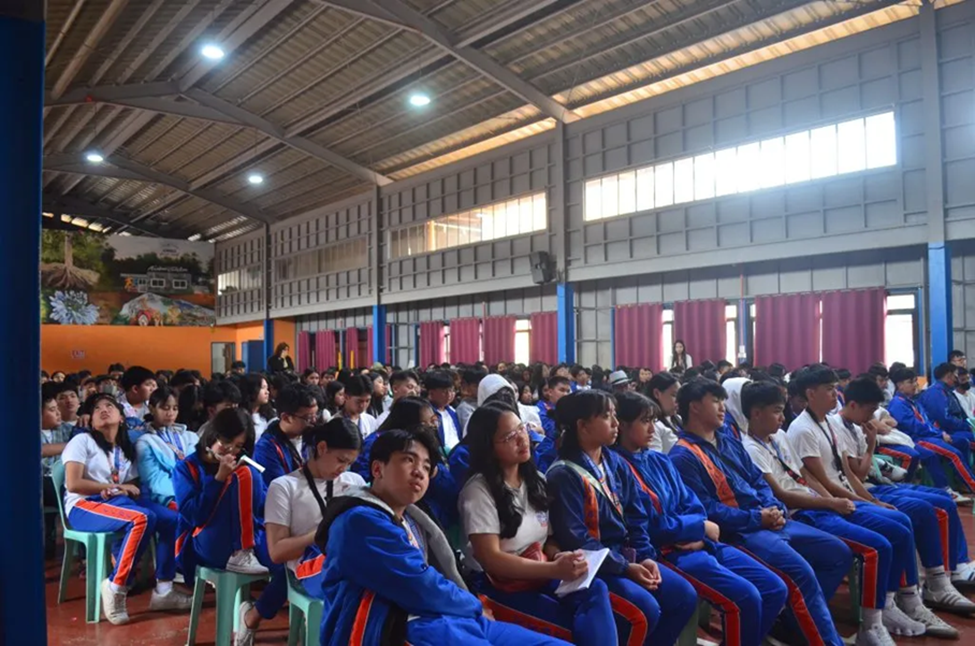
On March 17, 2026, CCDC’s Junior High School Department conducted “Voices of Change: Standing Up Against Bullying, Gender Discrimination, and Online Harassment” at Iyaman Hall, Dakilan Building.
Held as part of the College’s Women’s Month celebration, the activity involved 262 learners and nine teachers.
Through discussions on bullying, gender discrimination, responsible digital behavior, and individual rights, learners were encouraged to recognize harmful behavior, express concerns, and contribute to safe and inclusive learning spaces.
Extending Advocacy: Legal Awareness and Protection of Women’s Rights
CCDC’s efforts to promote gender awareness also extend beyond its campus through community engagement and legal education.
On December 15, 2025, the College of Law Community Legal Aid Center participated in the Commission on Higher Education–Cordillera Administrative Region’s culminating activity for the 18-Day Campaign to End Violence Against Women.
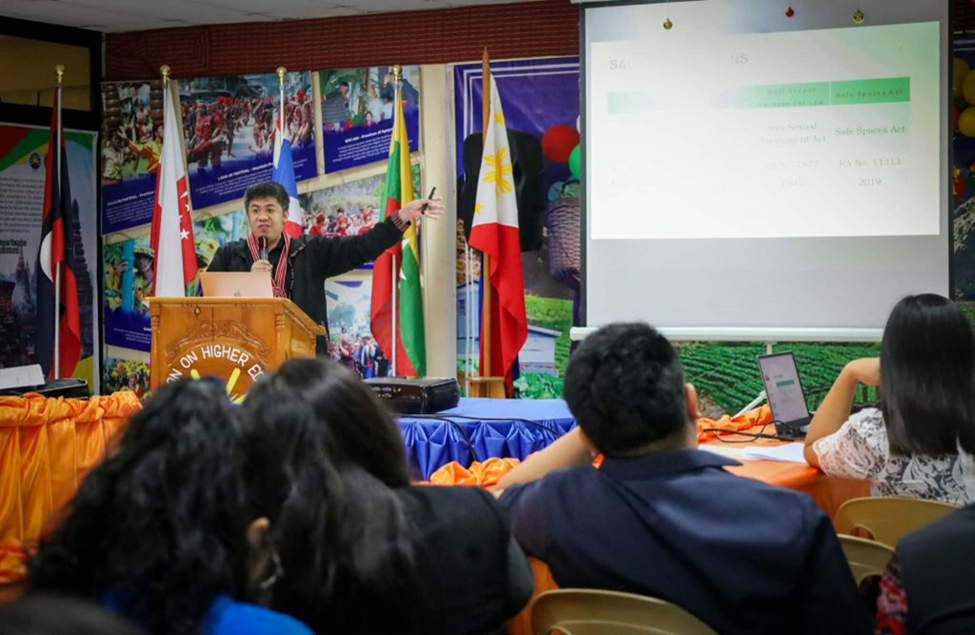
Representing CCDC, law student practitioner Roderick Nierva discussed three Philippine laws protecting women and children: Republic Act No. 9262, or the Anti-Violence Against Women and Their Children Act; Republic Act No. 7877, or the Anti-Sexual Harassment Act; and Republic Act No. 11313, or the Safe Spaces Act.