

Strengthening Women’s Participation, Non-Discrimination, Maternity and Paternity Support, Transgender Inclusion, and Protection Against Retaliation
Cordillera Career Development College (CCDC) supports women’s access to higher education through its open-admission approach, student-support services, and Gender and Development (GAD) Policy. These institutional provisions address the four stages of women’s educational access: applications, acceptance, entry and enrollment, and participation. Together, they provide a policy framework for inclusive access and continued engagement in college life.
A Foundation for Access and Participation
The CCDC Handbook for College Students 2024 establishes a foundation for admission and participation. Article IV, Section 2.1 provides for open admission; Article III, Section 1 recognizes student participation rights; and Article V describes orientation, guidance, student activities, organizations, and leadership development. The institutional GAD Policy further identifies responsibilities for supporting women’s access throughout the student journey.
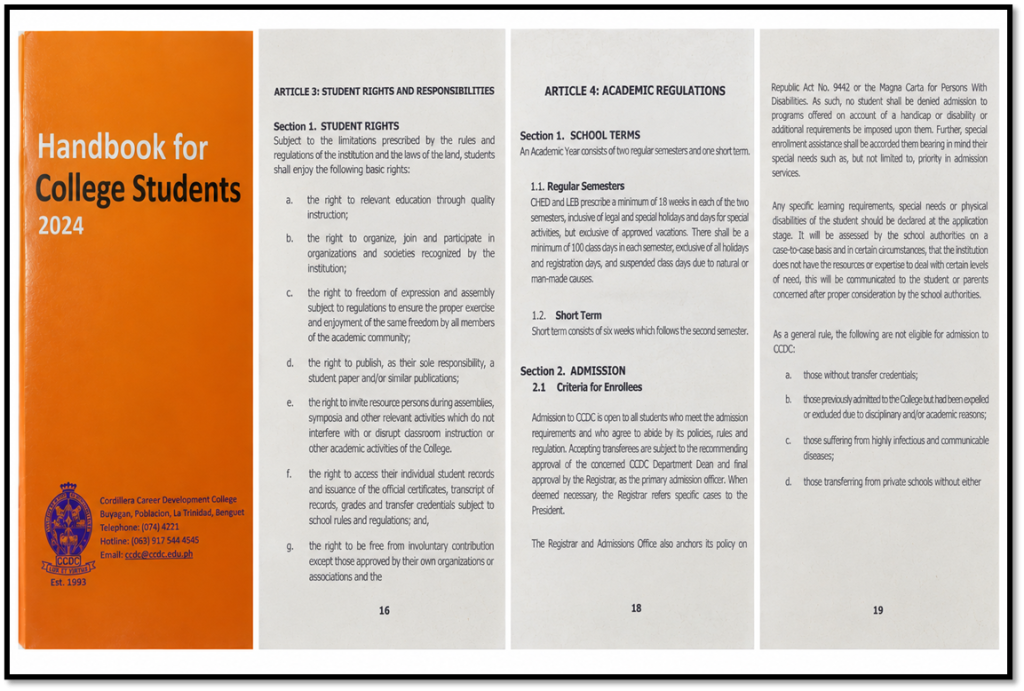
Women’s Applications: Clear Information and Opportunity
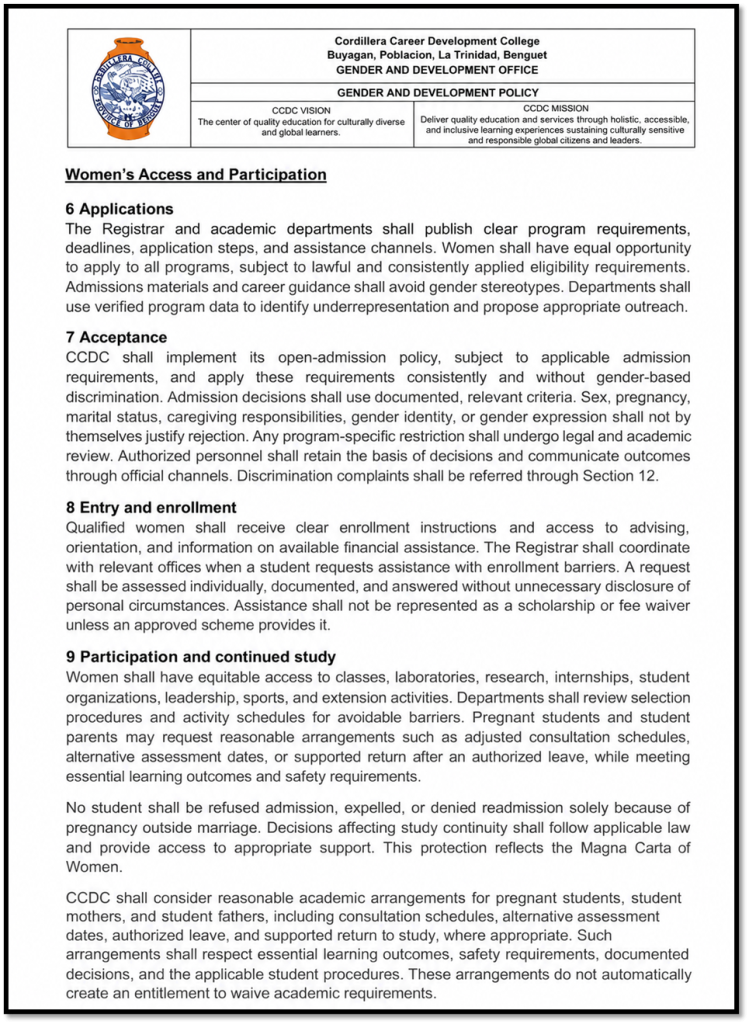
CCDC’s open-admission approach enables women to apply to academic programs, subject to applicable requirements. Under Section 6 of the GAD Policy, the Registrar and academic departments are responsible for communicating program requirements, application procedures, deadlines, and assistance channels. Admissions information and career guidance are intended to help prospective students make informed educational choices. Departments are also directed to review verified program-level data and consider outreach where women are underrepresented.
Women’s Acceptance: Transparent Admission Procedures
The College implements open admission subject to relevant program requirements. Section 7 of the GAD Policy provides for documented and consistently applied admission criteria. The Registrar and academic departments guide applicants on the necessary documents and program information, helping them complete the application and acceptance process. This approach supports a clear and accessible transition from application to admission.
Women’s Entry and Enrollment: Advising and Orientation
After acceptance, women entering CCDC are supported through enrollment instructions, academic advising, orientation, and information about available financial assistance. Section 8 of the GAD Policy assigns the Registrar a coordinating role when an applicant or student seeks help with enrollment-related barriers. These provisions complement the orientation and guidance services described in the Student Handbook and help students navigate their entry into college.
Women’s Participation: Academic and Campus Opportunities
Access to education extends beyond enrollment. Article III and Article V of the Student Handbook provide for student participation, organizations, activities, and leadership development. Section 9 of the GAD Policy addresses women’s participation in classes, laboratories, research, internships, student organizations, leadership, sports, and extension activities. Academic departments are directed to review participation procedures and activity schedules for avoidable barriers, helping students take part in learning and campus life.
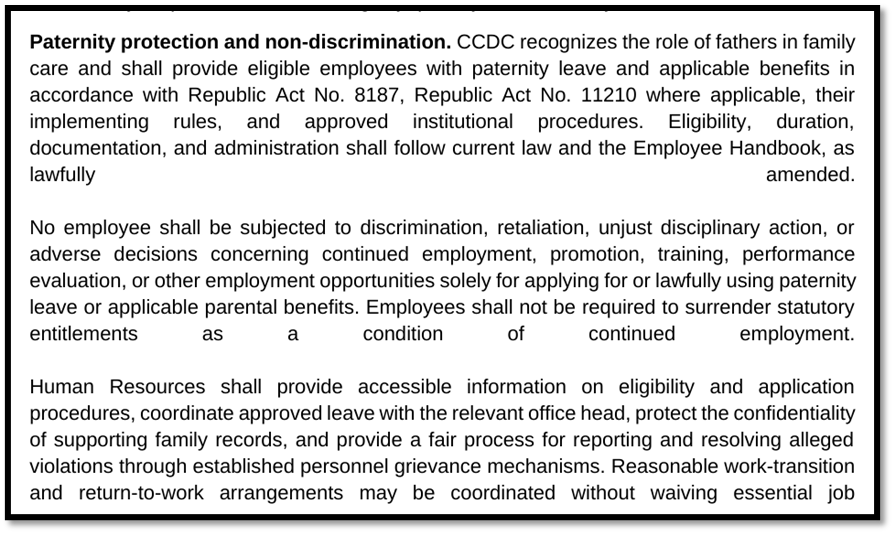
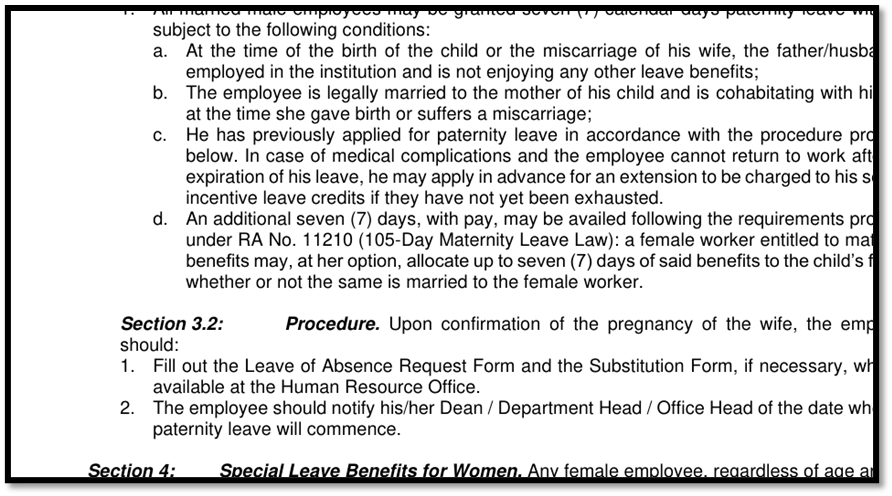
Promoting Shared Childcare Responsibilities Through Paternity Protection
CCDC recognizes that enabling fathers to participate in childcare can support women’s continued participation in education, employment, and professional development. The GAD Policy’s paternity protection provision recognizes leave and related benefits for eligible employees under Republic Act No. 8187 and applicable rules, administered through Human Resources and the approved Employee Handbook. The enhanced provision also protects employees from unjust employment disadvantage arising from lawful exercise of these rights. Section 9 additionally provides for consideration of reasonable academic arrangements for student fathers. These measures promote shared caregiving responsibilities rather than placing childcare expectations solely on women.
Supporting Women’s Participation Through Maternity Protection
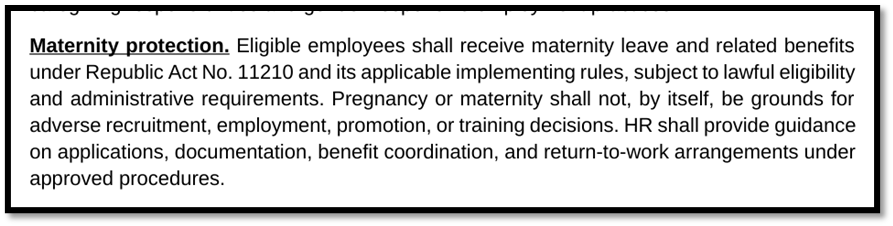
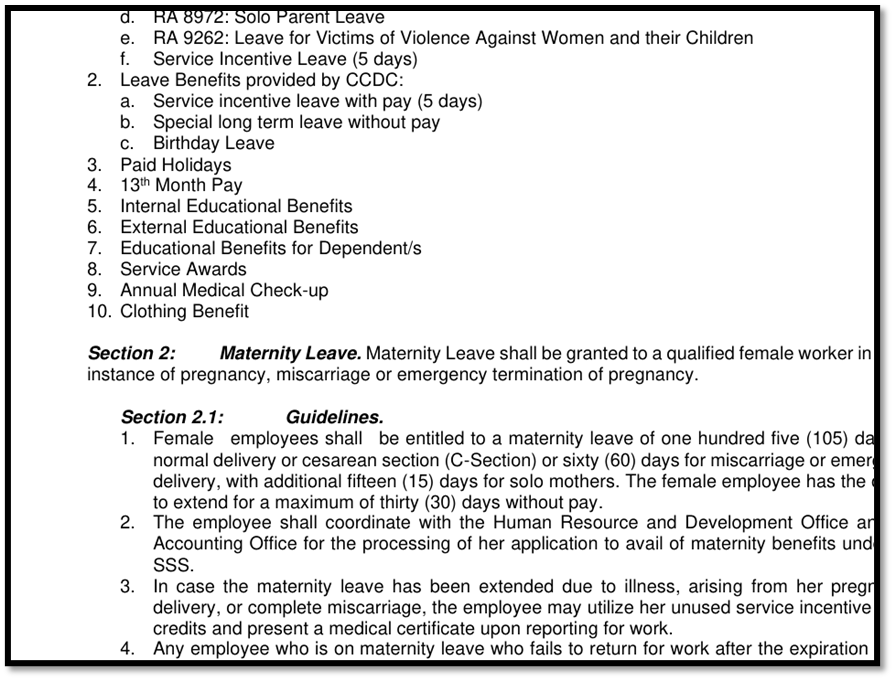
The GAD Policy provides maternity protection as part of its gender-responsive employment measures. Its maternity protection provision recognizes eligible employees’ leave and benefits under Republic Act No. 11210, subject to applicable requirements. Pregnancy or maternity shall not, by itself, be grounds for adverse recruitment, employment, promotion, or training decisions. Human Resources is tasked with guiding employees on applications, documentation, benefit coordination, and return-to-work arrangements. For students, Section 9 provides for consideration of reasonable academic arrangements for pregnant learners and student parents while maintaining essential academic requirements.
Promoting Equal Opportunities for Transgender and Gender-Diverse Individuals
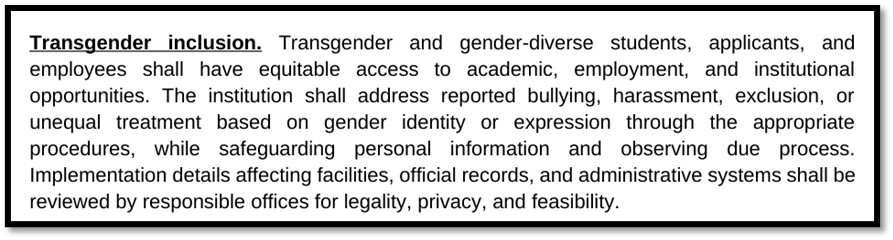
CCDC’s GAD Policy extends its non-discrimination commitment to transgender and gender-diverse applicants, students, and employees. Section 2 expressly addresses gender identity and gender expression. The policy’s transgender inclusion provision in its gender-responsive operations section calls for equitable access to academic, employment, and institutional opportunities and directs the College to address bullying, harassment, exclusion, and unequal treatment through appropriate procedures, with privacy and due-process safeguards. These provisions support an inclusive learning and working environment.
Upholding Non-Discrimination Against Women
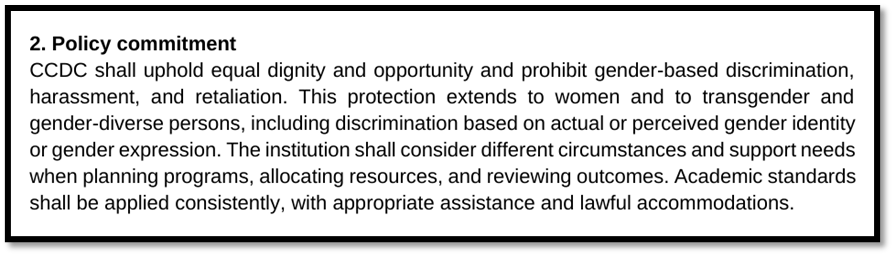
CCDC’s Gender and Development Policy affirms equal dignity and opportunity and prohibits gender-based discrimination and harassment. Section 2 establishes this institutional commitment, while Section 7 requires admissions decisions to apply relevant criteria consistently and without gender-based discrimination. Sex, pregnancy, marital status, and caregiving responsibilities shall not by themselves justify rejection. Section 9 further supports women’s equitable participation in academic, leadership, research, sports, and extension opportunities. Together, these provisions establish a policy framework for women’s access and continued participation.
Protecting Those Who Report Discrimination from Educational and Employment Disadvantage
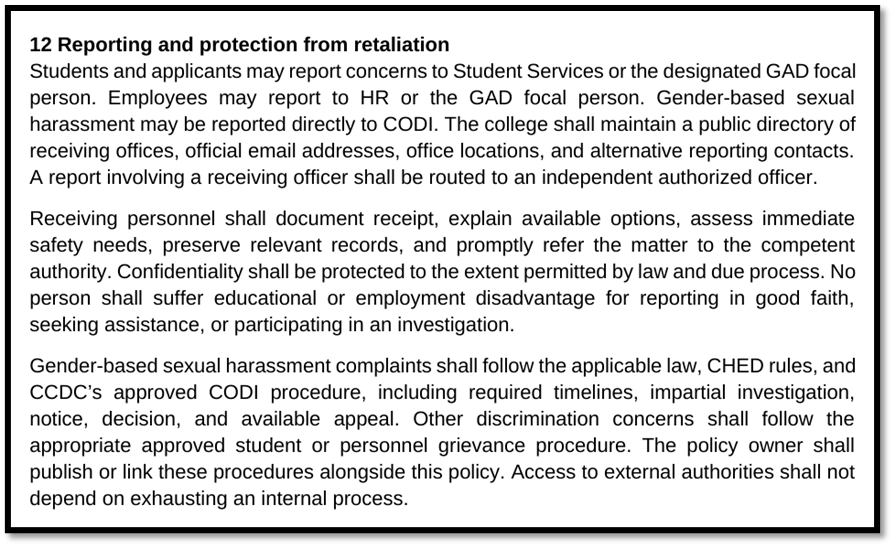
CCDC recognizes that meaningful access and participation require more than admission opportunities. Students and employees must also be able to raise concerns about discrimination without fear that doing so will jeopardize their education, employment, or institutional standing. Section 12 of the College’s Gender and Development (GAD) Policy establishes reporting channels and safeguards against retaliation.
Under the policy, students and applicants may report concerns to Student Services or the designated GAD focal person, while employees may approach Human Resources or the GAD focal person. Reports involving gender-based sexual harassment may be submitted directly to the Committee on Decorum and Investigation (CODI). When a complaint involves a receiving officer, it must be referred to an independent authorized officer.
The policy directs receiving personnel to document reports, explain available options, assess immediate safety concerns, preserve relevant records, and refer matters to the appropriate authority. Confidentiality is protected to the extent permitted by law and due process. Most importantly, the policy expressly provides that no person shall suffer educational or employment disadvantage for reporting in good faith, seeking assistance, or participating in an investigation.
These safeguards are intended to protect students’ continued access to learning and campus opportunities, as well as employees’ fair treatment at work. Complaints are handled through the applicable institutional grievance or CODI procedures, with due process and access to external authorities preserved. By establishing a formal protection against retaliation, CCDC reinforces its commitment to an educational and working environment in which discrimination concerns can be raised and addressed responsibly.
Institutional policy references
CCDC Handbook for College Students 2024, Article III, Section 1; Article IV, Section 2.1; and Article V.
CCDC Gender and Development Policy, Sections 2, 6–9, gender-responsive operations (transgender inclusion, maternity protection, and paternity protection), and Section 12 (reporting and protection from retaliation).
