

Climate action begins with decisions made in classrooms, on campus, and alongside local communities. At Cordillera Career Development College (CCDC), efforts to address climate change connect energy monitoring with environmental education, student participation, and cooperation with community partners. Together, these activities contribute to the broader goal of building a more climate-aware and resilient Benguet.
Understanding and Monitoring Campus Energy Use
CCDC reports institution-wide tracking of low-carbon energy use. The institutional data record 220,866 kilowatt-hours (kWh) of total energy use, including 28,539.09 kWh attributed to low-carbon sources. This represents approximately 12.9% of the reported total. These figures provide a useful baseline for examining the campus energy mix and identifying opportunities to improve energy efficiency and expand lower-carbon options.
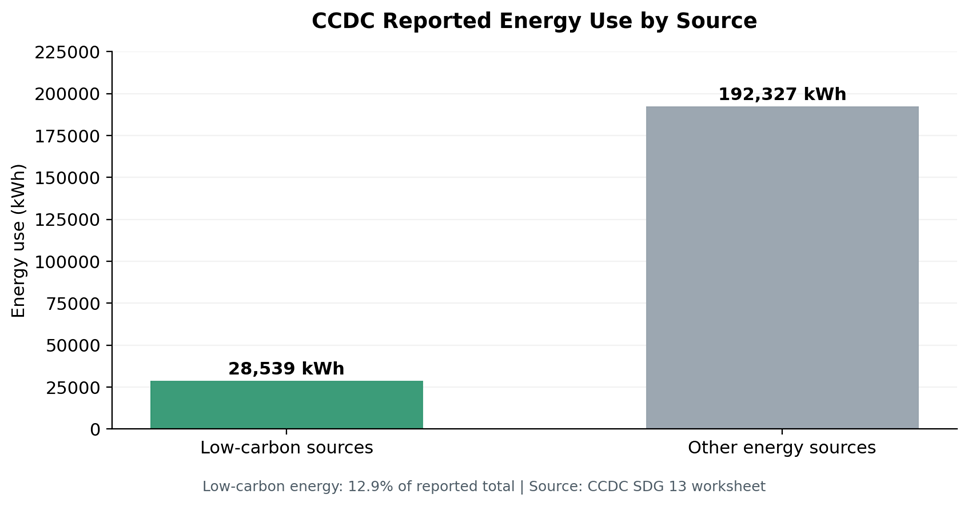
Monitoring is an important starting point, but energy figures alone do not establish a reduction in greenhouse-gas emissions. Continued annual measurement and consistent reporting boundaries will help CCDC assess progress over time.
Bringing Climate Education into Community Life
The College reports local educational programmes and campaigns that address climate-change risks, impacts, mitigation, adaptation, and preparedness. By connecting environmental concerns with practical learning, these efforts help students understand how individual choices, institutional practices, and collective action shape climate resilience.
CCDC also reports a Climate Action Plan shared with local government and community groups. This reflects an institutional intention to connect campus-level planning with wider local priorities. Public reporting of the plan’s objectives, implementation schedule, and progress would further strengthen transparency and community engagement.
Working with Local Government on Environmental Resilience
Climate resilience depends on collaboration beyond the campus. The SDG 13 records describe CCDC participation in municipal planning and community environmental activities in La Trinidad. They also identify involvement by Criminology students and Reserve Officers’ Training Corps (ROTC) participants in the fourth-quarter Balili River clean-up and creek and waterway declogging activities.
These activities link environmental stewardship with community preparedness. Keeping waterways clear and encouraging responsible waste disposal can support local efforts to reduce environmental pressures and strengthen public awareness of flood-related risks. The activities should be understood as contributions to local action rather than proof of quantified flood-risk reduction.
Empowering Young People to Lead Climate Action
The data further identifies collaboration associated with the UN Movers 4 Green Jobs Fellowship, highlighting youth engagement in environmental learning and climate-related opportunities. Such initiatives can encourage students to view sustainability not only as a campus responsibility but also as a field for leadership, skills development, and future work.
Across these activities, the role of students is especially important. Participation in clean-ups, environmental campaigns, and collaborative learning provides opportunities to translate classroom knowledge into visible community service.
Strengthening the Path Ahead
CCDC’s reported initiatives show how a higher education institution can contribute to climate action through measurement, education, and partnership. The next step is to strengthen the evidence of outcomes: tracking annual energy use on a consistent basis, documenting programme reach, reporting activities and partnerships with clear dates, and publishing progress against the Climate Action Plan.
The latest institutional data does not record an adopted carbon-neutrality target date. Establishing a clearly defined emissions baseline, scope of reporting, and measurable long-term targets would provide a stronger basis for future climate commitments.
Through sustained collaboration among students, employees, local government, and community organizations, CCDC can continue to turn climate awareness into practical action and support a more resilient future for Benguet.
