

Healthy rivers, watersheds, lakes and oceans depend not only on the communities that live beside them, but also on the decisions made in schools, workplaces and households. At Cordillera Career Development College (CCDC), the commitment to Sustainable Development Goal 14 is reflected in educational outreach, environmental stewardship, pollution prevention and collaboration to safeguard water-related ecosystems.
Education that builds environmental awareness
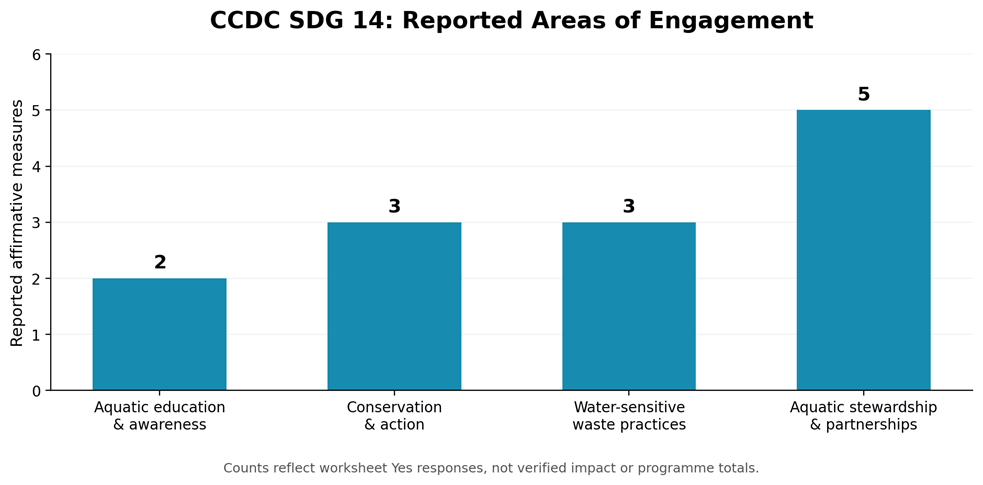
CCDC identifies freshwater ecosystem education and awareness-raising on destructive fishing and overfishing among its reported contributions. The integration of the Sustainable Development Goals across the curriculum provides a foundation for helping learners understand how water conservation, responsible resource use and everyday choices affect ecosystems beyond the campus. The institutional data also distinguish this work from a dedicated sustainable-fisheries outreach programme, which is not reported as implemented.
Conservation through campus and community action
The College reports support for events promoting the conservation and responsible use of aquatic resources, together with direct work related to ecosystem biodiversity. Its wider sustainability initiatives, including Project SAGIP at Admiral’s Farm Park, provide a context for connecting environmental education with practical care for land and water. The institutional data also records a commitment to sustainably sourced aquatic food on campus. These efforts position environmental responsibility as a shared concern of campus operations and community engagement.
Preventing pollution at its source
Protecting aquatic life begins upstream. CCDC reports guidelines for water discharge, an action plan to reduce plastic waste, and policies intended to prevent pollution originating from land-based activities. Such measures are particularly relevant to a land-based college: litter, improperly managed wastewater and other pollutants can ultimately reach streams and larger bodies of water. The College’s promotion of eco-friendly practices reinforces the importance of reducing avoidable waste and handling water responsibly.
Stewardship of shared water ecosystems
The SDG 14 data also identify plans to minimize ecosystem disturbance, monitoring of aquatic ecosystem health, continuing stewardship activities, collaboration with communities and a location-sensitive watershed management strategy. Several supporting articles for these measures are marked as drafts in the workbook. They are therefore presented here as institutional commitments reported in the data collection, rather than as independently verified environmental results. Publishing programme details, monitoring records and partner documentation will help demonstrate the extent of implementation.
A snapshot of reported engagement
Looking ahead
CCDC can strengthen its Life Below Water reporting by documenting the reach of environmental learning activities, recording water-quality and waste-management results, and publishing details of community partnerships and watershed stewardship. These steps would connect institutional policies and educational initiatives to observable benefits for aquatic ecosystems.
Through education, responsible campus operations and sustained community cooperation, CCDC seeks to contribute to a culture in which protecting water resources is a shared responsibility, one that begins locally and supports the long-term health of life below water.
