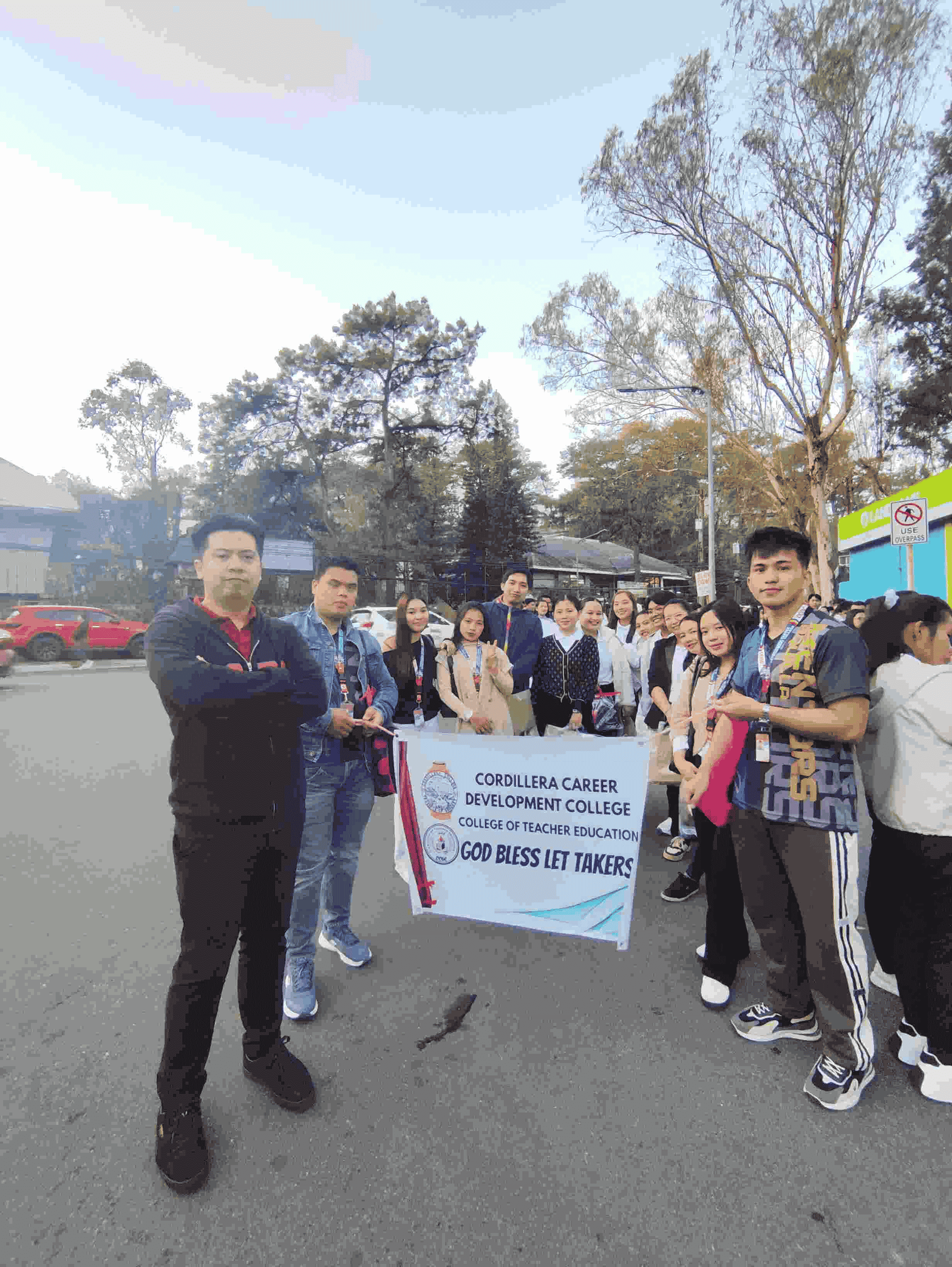
CCDC Bolsters Inclusive Education with Anti-Discrimination Policy and ‘Ayowan’ Program

La Trinidad, Benguet – Cordillera Career Development College (CCDC) is reinforcing its decades-long commitment to inclusive, anti-discriminatory education through robust policies and support programs. Marking 32 years since its founding vision of “Bringing Education Closer to the People,” CCDC continues to expand initiatives that empower students of all abilities to thrive. Two cornerstone efforts underscore this commitment: an Accommodation Policy for Students with Special Needs, and the Ayowan Program for Students – “Ayowan” being a local term meaning care – which provides comprehensive academic and psychosocial support. These initiatives, aligned with national laws and CCDC’s mission of holistic, accessible learning, ensure every student can pursue education in a safe and supportive environment.

Accommodation Policy: Accessible and Non-Discriminatory Education

Read More:  https://ccdc.edu.ph/special-needs-policy/#

CCDC’s Accommodation Policy for Students with Special Needs (issued by the Office of the President in late 2024) lays out clear measures to foster an inclusive campus. Anchored on the college’s mission of holistic, accessible learning experiences, the policy is explicitly guided by national inclusive education laws. It affirms that CCDC will accommodate learners with disabilities to the fullest extent of the school’s resources. Key features of the policy include:

Legal Alignment: The policy aligns with Republic Act No. 11650 (Inclusive Education Act of 2022), R.A. 7277 (Magna Carta for Disabled Persons), Batas Pambansa Blg. 344 (Accessibility Law), and CHED Memorandum Order No. 23 s.2000, among other laws. These laws inform the school’s standards for inclusion and accessibility.

Accessible Learning Facilities: CCDC ensures its learning environment is accessible to all. In compliance with R.A. 7277, the college gives priority to adaptive facilities and equipment – for example, providing tactile and Braille materials for visually impaired students and assistive audio devices for those with hearing impairments. Likewise, campus infrastructure follows the Accessibility Law’s principles so that buildings and classrooms are reachable, safe, and usable for persons with disabilities.

Procedural Safeguards: Consistent with R.A. 11650, the policy enforces procedural safeguards to protect students’ rights. Learners with disabilities and their parents/guardians are kept informed (in their mother tongue) of any educational decisions, and they participate in meetings on identification, placement, or program provision. The school also upholds confidentiality of personal information, requiring consent before sharing records among agencies. These steps ensure families are active partners in their education plans.

Protection from Discrimination and Abuse: The policy explicitly forbids any form of bullying, neglect, abuse, or discrimination against learners with disabilities on campus. CCDC vows to protect students with disabilities from harm as mandated by laws like R.A. 11650, R.A. 7277, the Anti-Bullying Act (R.A. 10627), and the Special Protection of Children Against Abuse, Exploitation and Discrimination Act (R.A. 7610). This guarantee reinforces that all students, regardless of ability, are entitled to a safe and dignified learning environment.

Priority Assistance: To further promote inclusion, CCDC provides priority services for students with special needs. The policy directs that these students have priority lanes when using campus facilities such as the cafeteria and during office transactions. In addition, they receive prompt assistance during emergencies and evacuations. By according priority attention, the college ensures that students with disabilities can access services quickly and comfortably alongside their peers.

“Ayowan” Program: Holistic Support for Student Well-Being

Read More:  https://ccdc.edu.ph/student-services/ayowan-program/

CCDC volunteer mentors and officials meet to finalize the Ayowan Program prior to its April 2023 launch.

Another flagship initiative is the Ayowan Program for Students, which embodies CCDC’s philosophy of compassionate, whole-person education. Launched in April 2023, “Ayowan” (a Kankana-ey term meaning care) is designed to provide tailored assistance to students based on their individual vulnerabilities – be they academic struggles, behavioral issues, or emotional and mental health challenges. The program ensures that no student is left behind due to life’s challenges.

Ayowan operates through a pool of volunteer mentors and counselors drawn from CCDC’s own faculty and staff. These trained volunteers offer their time to support students in need, and licensed guidance counselors are engaged for cases that involve sensitive or complex issues. Importantly, all Ayowan services are provided confidentially and on campus, in designated private venues such as departmental offices or the Guidance Office, to ensure comfort and privacy for students. Participation is voluntary – students can freely avail of help, and mentors render service out of commitment (with the administration providing recognition for their service).

The Ayowan Program offers a wide range of support services to cater to different student needs:

Academic Tutorials: One-on-one or group tutoring in reading, comprehension, and mathematics to help students overcome learning difficulties in these fundamental areas.

Academic Counseling: Personalized guidance sessions that help students develop effective study habits, plan their academic work, and navigate challenges in their coursework.

Talk Therapy: Informal talk therapy or “listening sessions” for students who may be dealing with stress, anxiety, or personal issues. These sessions allow students to speak with a caring mentor or counselor, gain emotional relief, and learn coping strategies.

Facilitated Family Sessions: Guided meetings between students and their parents or guardians, mediated by the Ayowan volunteers. These sessions aim to resolve issues at home that may be affecting the student’s academic progress or well-being.

Parent Consultation and Education: The program also reaches out to parents and guardians through academic information services. Parents receive information on the realities of their child’s schooling and how they can better support their education and behavior at home.

Additional Support Services: Depending on need, Ayowan can provide other forms of assistance such as regular monitoring and follow-up on a student’s status, spiritual support activities, and referrals to external services when necessary. Notably, all counseling – whether individual or group – is conducted with a gender-sensitive approach by licensed professionals, ensuring that guidance is respectful and inclusive of each student’s identity and context.

By addressing students’ academic and psychosocial needs in tandem, the Ayowan Program creates a safety net within the college. It has already shown tangible impact: in 2024, around 64 students received support through Ayowan, assisted by about 18 volunteer counselors, peer tutors, and mentors. Common concerns like academic difficulties, absenteeism, anxiety, or family issues are being met with compassion and practical help. CCDC’s Student Development Office coordinates referrals to Ayowan, so any teacher or dean who notices a struggling student can connect them to the program. From there, volunteers step in to mentor or counsel the student, with the focal Ayowan coordinators tracking each case’s progress. This community-driven initiative strengthens CCDC’s mission to nurture not only skilled professionals but also well-rounded, resilient individuals.

“For 32 years, CCDC, with its open admission, has witnessed how students from diverse backgrounds and capabilities, under proper guidance, have succeeded and passed licensure examinations and performed well in their workplaces,” says CCDC President Sherry Junette M. Tagle. This long experience underpins the college’s firm stance against discrimination. By instituting policies like the Accommodation Policy and programs like Ayowan, CCDC continues to cultivate an environment where every student – regardless of disability, background, or personal challenges – is given the opportunity and support to achieve their full potential.

Leave a Comment

Ayowan: CCDC’s Commitment to Care and Inclusion

What is the Ayowan Program?

At Cordillera Career Development College (CCDC), you’ll often hear the word “Ayowan” spoken with a smile. In the local dialect, “Ayowan” means “care,” referring to providing whatever is necessary for someone’s health, welfare, and protection. True to its name, the Ayowan Program is all about care – a holistic support system to make sure no student is left behind. If a student is struggling with a tough class, feeling anxious or isolated, or living with a disability that makes school challenging, Ayowan steps in to help. It addresses every dimension of student well-being, going beyond academics to include financial, emotional, and social support. In short, Ayowan ensures that life’s challenges don’t force any student off track.

What makes Ayowan special is the people behind it. The program rallies kind-hearted volunteers from within the CCDC community – teachers, non-teaching staff, and even fellow students as peer tutors – all eager to lend a hand or a listening ear. A teacher might volunteer to tutor a struggling reader after class, while a staff member might mentor a student dealing with personal issues. Ayowan services are available at all levels, from basic education through college, because CCDC believes support should have no age limit. Whether you’re a shy seventh-grader or a college senior, Ayowan is there for you, embodying CCDC’s commitment to an inclusive, caring education.

Support You Can Count On

The Ayowan Program offers support you can truly count on, with real stories of students overcoming hurdles. It’s built on personal connections and trust. In the past year alone, around 18 volunteer mentors, counselors, and tutors have supported approximately 64 students through Ayowan. That’s 64 young people who might have otherwise felt alone, now finding strength and guidance in this community-driven initiative. Each volunteer and student pair is a reminder that sometimes all it takes to turn things around is one caring friend.

What kind of help does Ayowan provide? Almost anything a student might need. For some, it’s academic tutoring – extra help with reading comprehension or math problems after school. For others, it’s one-on-one academic counseling, where a mentor guides them in study habits, time management, and finding confidence in their abilities. Many students take comfort in talk therapy sessions, getting a safe, confidential space to share what’s on their mind with a kind counselor. Ayowan even extends to families: counselors can facilitate heart-to-heart sessions between a student and their parents or guardians, helping resolve home issues that might be affecting the student’s school life. In short, if a student has a challenge, Ayowan finds a way to support them – from tutoring in academics to providing a friendly ear when life gets hard.

The impact of these efforts is felt every day. We’ve seen a once-struggling reader discover joy in books after weeks of patient tutoring, and a shy student find her voice in class after regular chats with a volunteer counselor. There are stories of students on the verge of dropping out who decided to stay because someone in Ayowan believed in them. The results speak for themselves: fewer students feel the need to drop out or skip classes now, and many are improving their reading, comprehension, and math skills with this extra support. Perhaps most importantly, students who might be dealing with heavy issues – from bullying to anxiety or troubles at home – know they’re not alone. Ayowan is proof that with a little care and companionship, no challenge is insurmountable.

Accessible for All

Inclusivity at CCDC isn’t just about academic support – it’s also about the campus and learning environment being accessible for all. Being a caring school means making sure everyone can get around and participate fully, including students with disabilities. In line with the Philippines’ Accessibility Law (Batas Pambansa Blg. 344), CCDC ensures that no physical barrier will impede any student. As one provision states, “No group of people shall be deprived of full participation and enjoyment of the environment
 due to any disability.” We take that to heart. Ramps, handrails, wide doorways, and elevator access are in place so that a student using a wheelchair or crutches can move around campus with ease. Classrooms and facilities are designed to be usable by everyone – whether disabled or not – so all students can learn comfortably side by side.

CCDC also provides specialized resources for those who need them. For example, students with visual or hearing impairments have access to appropriate learning tools: braille books and tactile learning materials for those with low vision, and assistive listening devices or hearing aids for those who have difficulty hearing. Desks and equipment can be adjusted for students with orthopedic needs, ensuring they can study in comfort as required by national standards. Even in day-to-day campus life, we add small touches of support. Students with special needs are given priority lanes in the cafeteria and other service areas, so they don’t have to struggle in long lines. During fire drills or emergencies, our staff are ready to provide extra assistance to anyone who needs help evacuating safely. These measures aren’t special treatment – they’re part of treating everyone with equal respect and care. By removing barriers both big and small, CCDC makes sure that each student can focus on learning and growing, rather than worrying about how to get up the stairs or access materials. Accessibility is our way of saying: you are welcome and included here.

Built on Compassion and the Law

CCDC’s commitment to inclusivity and care is built on a foundation of compassion and the law working hand in hand. On one side, it comes straight from the heart – a genuine desire to see every student thrive. On the other, it’s reinforced by strong national policies that uphold the rights of learners with special needs. The Philippines has made inclusive education a priority through laws like the Inclusive Education Act of 2022 (R.A. 11650) and the Magna Carta for Disabled Persons (R.A. 7277), as well as the Accessibility Law mentioned earlier. These laws mandate that schools provide equitable support and access for persons with disabilities, and CCDC’s own policies are proudly anchored on these principles. We don’t see them as mere obligations; we see them as affirmations of what we already believe – that every student deserves a fair chance.

For instance, R.A. 11650 emphasizes inclusive learning and even outlines safeguards to ensure students with disabilities (and their families) are informed of and involved in their education. R.A. 7277, the Magna Carta, protects against discrimination and urges institutions to provide facilities and support for people with disabilities. CCDC not only complies with these laws in letter, but embraces them in spirit. We have zero tolerance for bullying or discrimination on campus – every student should feel safe and respected, as also reinforced by the national Anti-Bullying Act. If a student has special needs, we approach accommodations not as special favors, but as every child’s right and a normal part of education. Our Ayowan Program itself was born from this compassionate philosophy: it wasn’t required by any law, but it arose because our faculty and staff saw a need and cared enough to act.

In practice, being built on compassion and law means we’re constantly striving to do more for inclusivity. The laws give us a strong framework (and yes, important reminders), but CCDC often goes further – finding creative, human-centered ways to support students beyond what regulations dictate. It might be a teacher volunteering extra hours for a student in need, or an administrator finding funds for adaptive equipment that isn’t yet standard. It’s this synergy of justice and kindness that defines CCDC’s approach: we uphold the rights of every learner and then go the extra mile to make them feel understood and valued.

A Place Where You Belong

Ultimately, CCDC is more than a college – it’s a family. The Ayowan Program and all our accessibility efforts boil down to one simple message: You belong here. We believe that every student, regardless of their background, ability, or struggles, has a home at CCDC. College can be challenging, and life can throw curveballs, but no one at CCDC has to face those challenges alone. We make it a point to notice when a student might need help, and we encourage you to reach out because caring for one another is in our culture.

If you’re a student (or a parent of one) reading this and thinking “I could use some help,” we want you to know that help is available – warmly and without judgment. Maybe you need academic support, or you’re feeling overwhelmed, or you just have questions about how to navigate school with your disability or difficulty. Please reach out to the Ayowan Program or our Guidance Office. Send us an email, drop by for a chat, or talk to a teacher – however you’re comfortable. Ayowan is here to listen and help, whether you need tutoring in a class, someone to talk to about personal matters, or advice on making the most of campus life.

At CCDC, caring is our promise. We’ve spent over 32 years “bringing education closer to the people,” and that means bringing support and compassion closer to those who need it too. So come be part of our community of care. No matter what you’re going through, remember that this is a place where you belong and a brighter future awaits. Together, let’s make your college journey a successful and fulfilling one – with Ayowan, you’ll always have a friend at CCDC.

Leave a Comment

CCDC Upholds Safe, Respectful Campus with Anti-Harassment & Safe Spaces Policies

Ensuring a learning and working environment free from harassment, discrimination and bullying is a key priority for higher education institutions today. At Cordillera Career Development College (CCDC), a private higher-education institution in La Trinidad, Benguet, the institution has explicitly adopted policies and mechanisms to guarantee a safe space for all students, faculty and staff.

Policy Framework – What CCDC Has Put in Place

Handbook for Students (2021 edition)
CCDC’s “Handbook for Students 2021 – Article 8, Sections 2-5” includes explicit sections dealing with harassment, discrimination, non-discrimination for women and LGBTQ persons, and safe-space protocols.

Under Section 3. Safe Spaces Policy, the handbook states:

“
CCDC recognizes that both men and women must have equality, security, and safety 
 in educational 
 institutions. 
 CCDC is committed to creating and sustaining a safe space environment for its students, employees and all its stakeholders, free from all forms of discrimination and harassment. It is also committed to truth and will ensure prompt investigation of all allegations of harassment
”

Under Section 4. Non-Discrimination Against Women and Section 5. Non-Discrimination for LGBTQ, the handbook sets out the institution’s commitment to equal opportunity, protection from unequal treatment, and facilities support (e.g., nursing rooms) for women.

The handbook further states that policies covering gender-    mainstreaming, child protection, bullying and harassment are          embedded in governance, curriculum, student services and campus life.

Student Help Lines & Reporting Mechanism
CCDC publishes on its “Student Help Lines – Campus Safety and Conduct” page a reporting channel specifically for bullying, harassment or inappropriate conduct:

“If you are a witness to or a victim of bullying, harassment, or inappropriate conduct
 please report it immediately. Your safety is our primary concern, and all reports are handled with confidentiality.”
The page lists contact offices (Office of Student Services, Security Guard/Marshal) and phone numbers and email contact for reporting.

Training and Awareness Activities

CCDC held a seminar for pre-service teachers (College of Teacher Education) on the themes of child protection policy, anti-bullying and the Safe Spaces Act (RA 11313) on November 20, 2023.

The institution also embeds gender-equity, sensitivity and human rights training: e.g., an article notes that 140 students from the College of Criminal Justice Education attended a human rights session February 18, 2023, and orientation on the Safe Spaces Act was held before each semester.

Public Commitment and Institutional Messaging
In its SDG-tracking section (linking to the United Nations Sustainable Development Goals), CCDC publicly declares:

“CCDC implements Anti-Harassment Policy to uphold school integrity and safety.”
The article summarises the policy’s components, such as forbidding unauthorised social media posts that misrepresent or defame the institution or its community members.

Leave a Comment

Education for All: CCDC’s Non-Discriminatory Admission Policy

At Cordillera Career Development College (CCDC), “Bringing quality education closer to the people” is more than just a slogan – it’s a guiding principle that shapes our admissions policy and campus culture. This commitment to inclusivity ensures that students from all backgrounds and abilities have the opportunity to pursue quality education with us. In a friendly and welcoming environment, CCDC opens its doors to all aspiring learners who are willing to work hard and abide by the school’s policies. Below, we highlight how CCDC’s non-discriminatory admission policy reflects our dedication to reducing inequality and expanding access to education for everyone, regardless of disability or background.

Open Admissions: Welcoming Students from All Backgrounds

CCDC’s admission policy is straightforward and inclusive: admission is open to all students who meet the requirements and agree to follow the school’s policies, rules, and regulations. In other words, if you have the necessary academic credentials (such as a high school diploma or equivalent) and are ready to uphold the college’s guidelines, you are warmly invited to join the CCDC community. There are no arbitrary barriers – no matter where you come from or what your story is, you’ll find that CCDC welcomes you with open arms.

This open-admission approach reflects the college’s core philosophy that the student is the center of the educational process. All of CCDC’s efforts are “anchored on ensuring [that] learners [have] access to quality education”. From urban centers to rural villages, and from various cultural or socio-economic backgrounds, students come to CCDC knowing that they will be treated fairly and given the chance to succeed. By expanding access to education for all, CCDC truly embodies the idea of bringing quality education closer to the people – making higher learning accessible to those who seek it.

No Discrimination – Education Without Limits

One of the hallmarks of CCDC’s admission policy is a firm stance against discrimination, especially toward students with disabilities. The Registrar and Admissions Office anchors its policy on Republic Act No. 9442, the Magna Carta for Persons with Disabilities. In line with this law, CCDC’s Student Handbook explicitly states that “no student shall be denied admission to programs offered on account of a handicap or disability”. This means that having a disability will never be a reason to prevent someone from enrolling in any course or program at CCDC. All students are evaluated based on the same academic criteria, not on personal circumstances.

Furthermore, CCDC does not impose any additional or special requirements on applicants with disabilities beyond the standard admission requirements. The goal is to keep the admissions process fair and equal for everyone. Your abilities, talents, and determination are what matter – not any disability or difference you might have. This non-discriminatory stance is a testament to CCDC’s commitment to reducing inequality in education, ensuring that no one is left behind due to physical or mental challenges.

Special Support for Students with Disabilities

CCDC goes beyond simply allowing students with disabilities to enroll; the college actively supports them to ensure they have a positive educational experience. In fact, the policy provides that special enrollment assistance shall be given to students with disabilities, with considerations for their specific needs – for example, priority in admission services and other helpful accommodations. This could include assistance with paperwork during enrollment, priority queues, or dedicated staff to guide students through the process. The aim is to make the transition into college as smooth as possible for students who might need extra help.

Personalized assistance is also a key part of CCDC’s approach. We encourage students (and parents) to inform the school of any specific learning requirements, special needs, or physical disabilities during the application stage. Sharing this information early allows CCDC to assess how best to support each student on a case-by-case basis. Our administrators and faculty will carefully consider the needs of the student and make the necessary accommodations or adjustments to help them thrive academically. In situations where extremely specialized support or resources might be required – beyond what the college currently has – CCDC will communicate openly with the student and their family to find the best path forward. The underlying message is that we are here to help you succeed. From the moment you apply and throughout your studies, our staff is ready to provide guidance and support tailored to your needs.

Another important aspect of support is the partnership between the college and the family. CCDC strongly recognizes the inherent role of the home and parents in a student’s success, especially for students with disabilities. We believe that when schools and families work together, students benefit the most. That’s why CCDC strives to maintain open communication with parents and guardians and to align our support strategies with what works best for each student at home and in school. As a parent, you can feel confident that CCDC values your insights and involvement in your child’s education. Together, we work hand-in-hand to create an enabling environment for your son or daughter to achieve their full potential.

Committed to Inclusion and Equality in Every Way

CCDC’s non-discriminatory policy for admissions is part of a larger culture of inclusivity and equality on campus. Beyond disabilities, the school is committed to welcoming students of all genders, ethnicities, religions, and backgrounds. In fact, CCDC strives to be gender-responsive and integrates the principles of gender equity, sensitivity, non-discrimination, and human rights into its governance, curriculum, student services, and activities. Every student is treated with dignity and afforded the same opportunities to participate and excel.

The college’s mission statement itself highlights the goal of providing “holistic, accessible, and inclusive learning experiences” to a culturally diverse community of learners. This inclusivity is not just about policies on paper – it’s lived out daily in the classrooms, hallways, and student organizations. Students often share that they feel a sense of belonging at CCDC because of this open and accepting culture. Bullying and discrimination are not tolerated; instead, understanding and respect are actively promoted. CCDC regularly conducts orientations and training on topics like students’ rights, anti-bullying, and creating a safe campus for all. The result is a learning environment where everyone can be themselves without fear of judgment, allowing each individual to focus on learning and personal growth.

By embracing diversity and practicing non-discrimination, CCDC helps reduce inequalities in education. We recognize that talent and potential are present in all segments of society, and it’s our job as an educational institution to give everyone a fair chance. This ethos of fairness and inclusion helps level the playing field, enabling students who might otherwise be marginalized to obtain a college education and improve their future prospects. In doing so, CCDC is not only changing individual lives but also contributing to a more equitable society – one graduate at a time.

“Bringing Quality Education Closer to the People”

CCDC’s non-discriminatory admission policy is a proud reflection of our slogan, “Bringing quality education closer to the people.” For over 30 years, CCDC has been devoted to extending the reach of education to as many people as possible, breaking down barriers that might stand in the way of someone’s educational dreams. Whether those barriers are physical (like a disability or distance), financial, or social, CCDC continually seeks ways to help students overcome them – be it through scholarships, flexible learning options, or the supportive policies described above. The ultimate goal is to make quality higher education accessible to all who seek it, truly bringing it closer to the people who need it most.

For prospective students and parents, this means you can approach CCDC with confidence. If you or your child aspires to study in a college that values quality, inclusivity, and community, you will feel right at home at Cordillera Career Development College. Our admissions team is ready to assist you through the application process, and our faculty and support staff are eager to help you succeed once you’re here.

We invite you to become part of the CCDC family. By choosing CCDC, you’re choosing a school that will not only provide excellent education but also stand by your side, celebrating your uniqueness and supporting your journey every step of the way. Together, let’s continue to reduce inequalities and uplift communities – one student at a time. Come and experience how CCDC truly brings quality education closer to the people, and see your educational goals turn into reality!

Read more:  https://ccdc.edu.ph/excerpts-from-the-handbook-for-students/

Leave a Comment

Excerpts from the Handbook for Students:

Section 2. ADMISSION

Criteria for Enrollees

Admission to CCDC is open to all students who meet the admission requirements and who agree to abide by its policies, rules and regulation. Accepting transferees are subject to the recommending approval of the concerned CCDC Department Dean and final approval by the Registrar, as the primary admission officer.  When deemed necessary, the Registrar refers specific cases to the President.

The Registrar and Admissions Office also anchors its policy on Republic Act No. 9442 or the Magna Carta for Persons With Disabilities. As such, no student shall be denied admission to programs offered on account of a handicap or disability or additional requirements be imposed upon them. Further, special enrollment assistance shall be accorded them bearing in mind their special needs such as, but not limited to, priority in admission services. 

Any specific learning requirements, special needs or physical disabilities of the student should be declared at the application stage. It will be assessed by the school authorities on a case-to-case basis and in certain circumstances, that the institution does not have the resources or expertise to deal with certain levels of need, this will be communicated to the student or parents concerned after proper consideration by the school authorities.

As a general rule, the following are not eligible for admission to CCDC:

those without transfer credentials;

those previously admitted to the College but had been expelled or excluded due to disciplinary and/or academic reasons;

those suffering from highly infectious and communicable diseases;

those transferring from private schools without either government recognition or permit; and,

high school graduates who have academic deficiencies.

Entrance Requirements. Applicants for admission are required to submit the following during admission and enrollment process:

For Freshmen: CCDC Application for Admission duly accomplished, Report Card (Form 138) and Permanent Record (Form 137/SF-10), Certificate of Good Moral Character, Clear Photocopy of PSA Birth certificate, Results of Interest test and other pertinent institutional proficiency exams, PSA marriage certificate for married female students, 1 long brown envelope. (Other requirements may be required such as medical clearance).

For Graduate Programs: CCDC Application for Admission form duly accomplished, Transfer Credentials, Clear Photocopy of PSA birth certificate and/or PSA marriage certificate for married female students, certificate of good moral character, a notarized copy of permit to study for Government Employees, 1 long brown envelope.

For College of Law: CCDC Application for Admission form duly accomplished, Passed PhilSat Exam, Transfer Credentials, Certificate of Good Moral Character, certified true copy of College Diploma, 2 copies of authenticated PSA Birth Certificate, result of entrance or qualifying exam, 1 long brown envelope, and other pertinent institutional proficiency exams.

For Old Students: Student’s copy of grades for the semester last attended and evaluation issued by respective Deans or Department Heads to ensure that students comply with the prerequisite subjects prior to enrollment in higher/advanced courses.

For Transferees: All transferees shall undergo an interview by the Dean or designated school official to determine admission or non-admission to CCDC.  Upon recommendation of the Dean, the transferee accomplishes the CCDC Application for Admission Form, and submits transfer credentials, report on final grades, clear photocopy of PSA birth certificate, and certificate of good moral character from the last school attended and 1 long brown envelope

College of Law Transferees: Transfer credentials including certificate of eligibility for admission into law course (CEL) from school of origin, 2 copies of authenticated PSA Birth Certificate, letter of intent to transfer, duly accomplished CCDC application for admission, certified true copy of diploma, certificate of good moral character from the last school attended and 1 long brown envelope

Graduate School and Foreign Student (from Philippine School) Transferees: Duly accomplished CCDC application for admission form, certificate of eligibility to transfer, clear photocopy of PSA birth certificate, certificate of good moral character from the last school attended, and 1 long brown envelope

For Cross enrollees: Cross-enrollment Permit from the mother school, duly signed by the School Registrar. Admission of cross-enrollee is subject to the approval of the Registrar, in coordination with the concerned Dean.

For Foreign Students (FS): Scholastic records duly authenticated by the Philippine Foreign Service Post located in the student applicant’s foreign country of origin or legal residence; photocopy of data page of the student’s passport showing the date and place of birth, student visa, and birth certificate or its equivalent duly certified by the Philippine Foreign Service Post, located in the student applicant’s country of origin or legal residence, police clearance/report and a notarized affidavit of support including bank statements or notarized notice of grant for institutional scholars to cover expenses for the FS’ accommodation and subsistence, as well as the school dues and other incidental expenses.

Leave a Comment

Everyone Deserves a Chance: How CCDC Welcomes Students from All Walks of Life

For many young people in the Cordilleras, getting a college education can feel like an impossible dream. Distance, poverty, and life’s unexpected turns often put school on hold—or push it out of reach entirely. But at Cordillera Career Development College (CCDC), we believe that every student, no matter where they come from, deserves a fair shot at building a better future.

This belief is more than just a slogan—it’s our mission. For over 30 years, CCDC has lived by the promise of “Bringing Education Closer to the People,” and today, that promise is stronger than ever.

Opening Doors for the Underserved

In 2024, CCDC didn’t just aim to include students from underrepresented backgrounds—it succeeded. Over 35% of our new college freshmen came from farming families, indigenous communities, or households with limited income.  Many of these students are the first in their family to attend college.

How do we reach them? Our dedicated Guidance and Marketing Team travels to remote public schools, reconnects with out-of-school youth, and makes sure that even the most isolated students know: you are welcome here.

From Getting In to Graduating Strong

It’s one thing to get into college—but it’s another to stay, succeed, and graduate. That’s why we’re proud that 62% of our 2024 graduates came from low-income or rural families. They’ve overcome challenges many people never see—and they did it with the right support.

That support comes through our Ayowan Program, named after the Ibaloi word for “care.” Ayowan offers:

Financial assistance through scholarships and grants,

Emotional and mental health support via counseling and mentoring,

Academic help like tutoring for students who are struggling.

This caring community has helped CCDC achieve one of the highest completion rates in the region—79% of our students finish their program. 

 Because once students feel supported in all areas of their lives, they thrive.

Financial Help That Makes a Real Difference

Money should never be the reason someone gives up on college. That’s why nearly half of all CCDC students in 2024 received scholarships or financial aid. We work with government agencies, private sponsors, and offer our own in-house assistance so students can focus more on studying—and less on surviving.

For students from far-flung barangays, we even offer affordable housing on campus. Some give back by helping with school maintenance or security, turning assistance into a form of service and pride

Real Stories, Real People

The power of education is best told through the stories of our students. Like Brent O. Fermin, who grew up in a farming community and worked as a student assistant just to stay in school. Despite the financial and emotional load, he graduated with a degree in Criminology in June 2024—and was honored for Excellence in Student Service

Also, Leorize D. Baleo-ang, who juggled academics and work as a student assistant. With determination and discipline, he earned his degree and became a police officer, now part of the Special Action Force of the Philippine National Police. 

These are just two of many inspiring journeys that began at CCDC. Every year, more students like them prove that hard work, matched with the right support, can overcome even the steepest obstacles.

Justice, Community, and a Culture That Cares

Support at CCDC goes beyond tuition. Our Community Legal Aid Center offers free legal help to students and community members who need it most. And our campus is built around respect for Cordilleran values—welcoming students from all tribes, religions, genders, and identities.

Here, you’re not just a student ID. You’re a story, a dream in motion, and a valued member of a caring community.

The Future Starts with a First Step

If you’re a student—or a parent of one—wondering if college is really possible, we’re here to say: yes, it is. CCDC is built for students like you. Whether you’re from a mountain village, a farming family, or just looking for a second chance, there’s a place for you here.

We don’t just offer education. We offer hope, support, and the tools to build a brighter future.

Leave a Comment

Every Student Matters: CCDC Issues Landmark Accommodation Policy for Students with Special Needs

CCDC, believing that every learner brings unique strengths and stories, issues CMO 5 in 2025 to cement its commitment to make education accessible and meaningful for all, including students with special needs. This commitment is reflected in CCDC’s Accommodation Policy for Students with Special Needs, is built on national laws that protect and promote inclusive education such as the Inclusive Education Act of 2022 (RA 11650), the Magna Carta for Disabled Persons (RA 7277), and the Accessibility Law (BP 344).

This policy acknowledges students who are visually or hearing impaired, those with speech or physical challenges, and learners who require cognitive or behavioral support. At CCDC, they are not only accepted — they are welcomed, supported, and valued.

How CCDC Brings Inclusion to Life

In real, everyday ways, the CCDC campus and community put this policy into action:

Priority lanes and assistance in school offices and the canteen ensure students with special needs don’t have to struggle lining up.

Learning aids and adaptive tools are made available, such as tactile and braille learning materials, auditory support tools, and adjustable seating for students with mobility needs.

The campus itself is continually being improved to reflect accessibility standards — making spaces reachable, safe, and comfortable for everyone.

Leave a Comment

CCDC: 32 Years of Bringing Education Closer to the People

For over three decades, Cordillera Career Development College (CCDC) has lived up to its founding vision of Bringing Education Closer to the People. In its 32nd year, the institution continues to expand its support programs designed to empower students—especially those from low-income families—to complete their college education and build better futures.

Ayowan Program: A Holistic Approach to Student Well-being

The CCDC Ayowan Program embodies the college’s commitment to holistic education. It goes beyond tuition support to address the multiple dimensions of student life—financial, academic, emotional, and social.

From direct financial interventions to mental health and counseling services, the Ayowan Program ensures that no student is left behind due to life’s challenges. It also includes peer mentorship and tutorial programs that help students cope with academic demands and maintain their emotional balance.

In 2024, approximately 64 students have availed of the services under the Ayowan Program, supported by around 18 volunteer counselors, peer tutors, and mentors. This community-driven initiative strengthens CCDC’s mission to nurture not only skilled professionals but also compassionate citizens.

Housing Support for Deserving Students

Recognizing that access to safe and affordable housing is essential to academic success, CCDC provides additional housing support for deserving students from remote areas and low-income families.

In return, some of these students take on meaningful roles as caretakers of school facilities—helping secure the campus and maintain its cleanliness during after-school hours. This initiative not only reduces living expenses but also fosters responsibility, service, and pride in community stewardship.

Community Legal Aid Center: Justice and Support for All

With the establishment of the CCDC College of Law and the offering of the Juris Doctor program, the institution extends its social responsibility through the Community Legal Aid Center (CLAC). Located at the heart of the campus, the CLAC offers free legal services not only to students and employees but also to members of the surrounding community who otherwise could not afford legal assistance.

In 2024, the CLAC has served over a hundred students and community members, providing advice, representation, and education on legal rights and access to justice.

A Continuing Legacy of Compassion and Opportunity

Through these initiatives, CCDC proves that education is not merely about academic excellence—it is about equity, compassion, and empowerment. By providing comprehensive support systems, the college ensures that every student—regardless of economic background—has the opportunity to thrive and finish their studies.

As CCDC marks its 32nd year, it continues to stand as a beacon of hope for the youth of the Cordilleras—fulfilling its enduring promise of Bringing Education Closer to the People.

Leave a Comment

CCDC Upholds Safe, Respectful Campus with Anti-Harassment & Safe Spaces Policies

Ensuring a learning and working environment free from harassment, discrimination and bullying is a key priority for higher education institutions today. At Cordillera Career Development College (CCDC), a private higher-education institution in La Trinidad, Benguet, the institution has explicitly adopted policies and mechanisms to guarantee a safe space for all students, faculty and staff.

Policy Framework – What CCDC Has Put in Place

Handbook for Students (2021 edition)
CCDC’s “Handbook for Students 2021 – Article 8, Sections 2-5” includes explicit sections dealing with harassment, discrimination, non-discrimination for women and LGBTQ persons, and safe-space protocols.

Under Section 3. Safe Spaces Policy, the handbook states:

“
CCDC recognizes that both men and women must have equality, security, and safety 
 in educational 
 institutions. 
 CCDC is committed to creating and sustaining a safe space environment for its students, employees and all its stakeholders, free from all forms of discrimination and harassment. It is also committed to truth and will ensure prompt investigation of all allegations of harassment
”

Under Section 4. Non-Discrimination Against Women and Section 5. Non-Discrimination for LGBTQ, the handbook sets out the institution’s commitment to equal opportunity, protection from unequal treatment, and facilities support (e.g., nursing rooms) for women.

The handbook further states that policies covering gender-    mainstreaming, child protection, bullying and harassment are          embedded in governance, curriculum, student services and campus life.

Student Help Lines & Reporting Mechanism
CCDC publishes on its “Student Help Lines – Campus Safety and Conduct” page a reporting channel specifically for bullying, harassment or inappropriate conduct:

“If you are a witness to or a victim of bullying, harassment, or inappropriate conduct
 please report it immediately. Your safety is our primary concern, and all reports are handled with confidentiality.”
The page lists contact offices (Office of Student Services, Security Guard/Marshal) and phone numbers and email contact for reporting.

Training and Awareness Activities

CCDC held a seminar for pre-service teachers (College of Teacher Education) on the themes of child protection policy, anti-bullying and the Safe Spaces Act (RA 11313) on November 20, 2023.

The institution also embeds gender-equity, sensitivity and human rights training: e.g., an article notes that 140 students from the College of Criminal Justice Education attended a human rights session February 18, 2023, and orientation on the Safe Spaces Act was held before each semester.

Public Commitment and Institutional Messaging
In its SDG-tracking section (linking to the United Nations Sustainable Development Goals), CCDC publicly declares:

“CCDC implements Anti-Harassment Policy to uphold school integrity and safety.”
The article summarises the policy’s components, such as forbidding unauthorised social media posts that misrepresent or defame the institution or its community members.

Leave a Comment

DEI Integrated into Governance, Curriculum, and Student Life

CCDC ensures that the responsibility for DEI is integrated across its governance structure and campus life. The college’s leadership – including its governing board and administrative officials – proactively champions diversity and inclusion in their decision-making. “CCDC strives to be gender responsive and commits to integrate the principles of gender equity, gender sensitivity, non-discrimination and human rights in its governance, curriculum, [and] student services…,” explains Annabelle B. Gondales, CCDC’s Vice President for Administration. This top-down commitment means that every unit of the college plays a role in advancing DEI goals.

In practical terms, CCDC’s integrated approach embeds DEI considerations into all key areas of the institution. These principles are evident in:

Governance and Leadership: Policies and executive directives reflect DEI priorities, ensuring that decisions at the highest level consider the welfare and rights of all members of the college community. The governing body sets an example by upholding inclusive values in administrative practices and campus regulations.

Curriculum and Instruction: Academic programs are continually reviewed and developed with inclusivity in mind. Instructors incorporate perspectives of equity and human rights into their teaching, helping students appreciate diversity and global citizenship.

Student Services and Support: Offices such as Admissions, Guidance, and Student Development operate under non-discriminatory guidelines. For instance, CCDC’s open admissions policy welcomes all students who meet requirements, and no applicant is denied admission on account of disability, in line with the Magna Carta for Persons with Disabilities (RA 9442). Services like counseling and financial aid are accessible to ensure that students from all backgrounds (including ethnic minorities, low-income families, and persons with disabilities) receive equal support.

Campus Activities and Extension Programs: Diversity and inclusion are promoted in extracurricular activities, organizations, and community extension projects. Whether it’s student organizations, cultural events, or outreach programs, CCDC ensures these activities are welcoming and respectful of all cultures, faiths, and identities. The campus itself models inclusivity – for example, multi-faith spaces and intercultural events underscore respect for different religions and ethnic traditions.

By infusing DEI into every department and activity, CCDC’s administration creates a campus atmosphere where inclusion is “everyone’s job.” This integrated governance approach eliminates silos – diversity and equity aren’t confined to a committee’s agenda, but are a shared institutional responsibility. The college leadership regularly monitors and guides these efforts, ensuring consistency with CCDC’s policies and values. As a result, diversity and inclusion goals are advanced holistically through academics, student life, and governance practices, reinforcing CCDC’s identity as an inclusive institution.

Training and Proactive Programs for an Inclusive Campus

Under CCDC’s governance-driven DEI model, the college doesn’t just set policies – it also implements proactive programs and training to bring those policies to life. Continuous education and capacity-building are key to sustaining an inclusive, equitable campus culture. Guided by its administrative leadership, CCDC administers regular training sessions and initiatives that promote awareness, prevent discrimination, and uphold human rights for all. Some of the proactive measures in place include:

Regular Gender Sensitivity Training: The college conducts workshops and seminars to educate both employees and students on gender sensitivity and inclusion. These trainings help the community understand gender issues, challenge biases, and develop empathy, empowering participants to uphold CCDC’s gender-responsive values.

Orientation on Anti-Discrimination Policies: New students and staff receive orientation about the school’s non-discrimination policies (such as the Gender-Sensitive Campus Policy and Safe Spaces Act provisions). Through information-dissemination sessions built into educational programs, CCDC raises awareness on gender equality, human rights, and the expected standards of respectful conduct on campus. This ensures everyone knows their rights and responsibilities in maintaining an inclusive environment.

Confidential Reporting Mechanisms: CCDC has established clear protocols for reporting any incidents of discrimination, harassment, or bullying. Community members can confidentially report violations, and the administration guarantees that every complaint will be taken seriously, investigated thoroughly, and addressed promptly. This system, overseen by the college’s governing body, reinforces accountability and trust – students and staff can speak up without fear of retribution, knowing that the institution will respond fairly.

Support Services and Remedial Actions: In line with its human rights commitment, CCDC provides support to individuals who may experience bias or harassment. The college offers counseling and support services to anyone affected by discrimination, ensuring their well-being is prioritized. Moreover, the administration is prepared to take appropriate actions to prevent any recurrence of discriminatory incidents, creating a safer and more equitable campus for everyone.

All these programs are administered under CCDC’s governance framework, meaning the college leadership actively allocates resources, sets goals, and evaluates outcomes for DEI initiatives. This proactive stance aligns with CCDC’s recognition that education is a fundamental human right and must be accessible in a safe, supportive setting for all. By continuously training its community and addressing issues head-on, the college not only complies with legal mandates but also fosters a culture of respect and empathy that goes beyond compliance.

A Governance Commitment to Inclusive Education

CCDC’s approach to diversity, equity, and inclusion is deeply rooted in its institutional values and governance philosophy. The governing body’s active role – from enacting strong anti-discrimination policies to championing training and support programs – ensures that DEI is not an afterthought but a core part of the college’s identity. This policy-driven, gender-sensitive, and non-discriminatory approach creates a campus where every student, faculty, and staff member is treated with dignity and given equal opportunity to succeed. It also mirrors national and global ideals of inclusive education: CCDC’s gender mainstreaming efforts and human rights orientation reflect the broader educational goal of leaving no one behind. By institutionalizing DEI through governance, CCDC demonstrates that a truly inclusive college is achieved not by a single committee, but by integrating equity in every policy, program, and practice. From the classroom to the boardroom, the message is consistent – diversity and human rights matter in all that CCDC does. This professional and inclusive ethos not only meets legal and accreditation standards, but also enriches the learning experience, preparing students to thrive in a diverse society. As CCDC continues to grow, its governing body remains committed to nurturing an environment where respect, equity, and inclusivity are the norm, thereby fulfilling the college’s mission of providing quality education for all in an atmosphere of mutual respect and human dignity.

Leave a Comment