Cordillera Career Development College (CCDC) is committed to preventing water pollution through responsible campus operations, proper waste and wastewater management, environmental monitoring, and appropriate incident-response procedures. These measures aim to prevent contaminants from entering campus water systems, protect groundwater and surrounding water resources, and minimize pollution risks arising from routine activities, accidental spills, leaks, and other environmental incidents.
1. Prevention of Water Contamination
CCDC promotes the proper handling, storage, and disposal of chemicals, oils, cleaning agents, and other potentially harmful substances. Students, employees, concessionaires, contractors, and maintenance personnel are expected to avoid disposing of hazardous substances, grease, and solid waste into sinks, toilets, drainage facilities, or waterways. Proper waste segregation and responsible chemical handling help minimize the risk of contaminants entering the campus drainage and water systems.
2. Wastewater and Drainage Management
Wastewater generated from campus facilities is managed through the College’s septic tank system, with periodic inspection, maintenance, and desludging to support proper containment and initial treatment. Accumulated septage is collected by an authorized service provider and transported to an appropriate treatment facility. Regular inspection and cleaning of drainage facilities also help prevent blockages, improper discharges, and the accumulation of pollutants that could be carried into waterways during rainfall.
3. Hazardous Waste Management and Pollution Prevention
CCDC maintains hazardous waste generator registration with the Department of Environment and Natural Resources–Environmental Management Bureau (DENR-EMB), as evidenced by its Hazardous Waste Generator Registration Certificate. The certificate identifies hazardous waste categories generated by the College, including acids, inorganic chemicals, waste electrical and electronic equipment, oil-contaminated materials, solvents, and other regulated waste streams.
The College also maintains a Memorandum of Agreement with CyberTechnologies Co. for the transport of prescribed hazardous wastes to an appropriate treatment, storage, and disposal facility through an authorized service provider. Hazardous wastes are to be properly contained, labeled, sealed, and documented before collection and transport. These measures help prevent leaks, accidental spills, and the release of hazardous substances that could contaminate soil, drainage systems, and water resources.
4. Prevention and Response to Accidental Pollution
CCDC recognizes that spills, leaks, equipment failures, and other unexpected incidents may result in water contamination if not addressed promptly. When such incidents occur, the appropriate campus personnel should assess the situation, identify potential pathways to drains or water sources, and implement suitable containment and cleanup measures.
Where necessary, affected drainage points should be protected, the spread of pollutants prevented, and the designated Pollution Control Officer and relevant safety personnel notified. Contaminated materials and cleanup residues should be collected and managed through appropriate waste disposal procedures. Incidents involving possible water contamination should be documented, investigated, and followed by corrective measures to reduce the likelihood of recurrence.
5. Environmental Monitoring and DENR Reporting
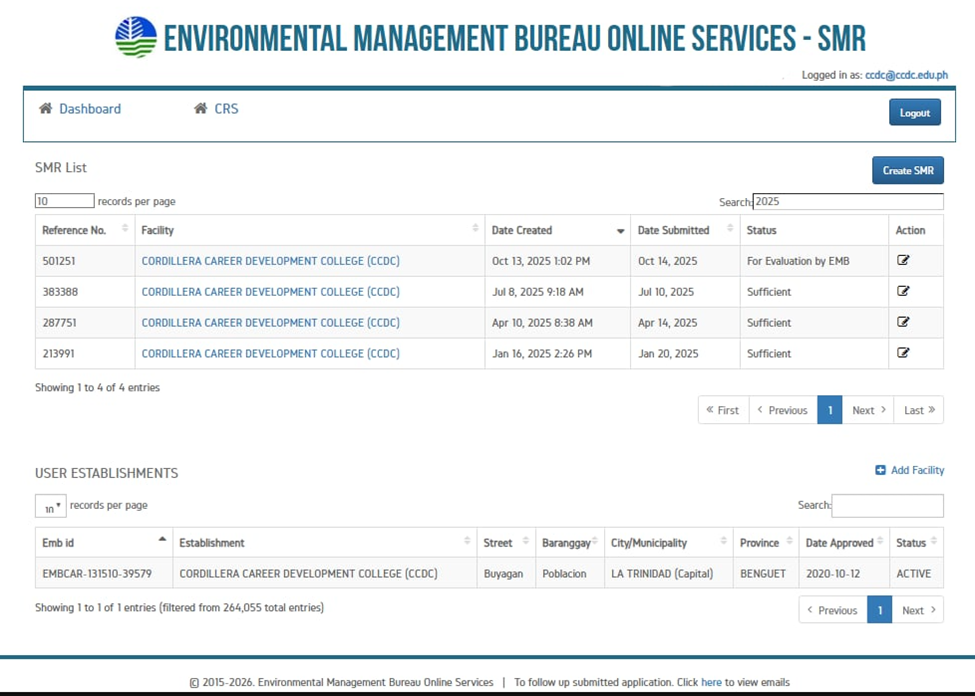
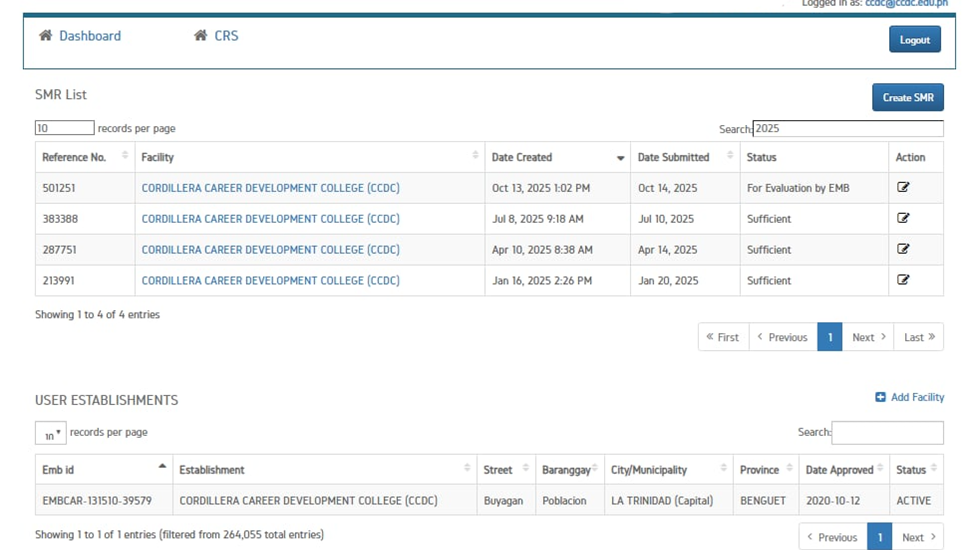
CCDC, through its designated Pollution Control Officer, James K. Fernando, regularly submits its quarterly Self-Monitoring Report (SMR) to the Department of Environment and Natural Resources (DENR), as part of its environmental monitoring and regulatory reporting responsibilities. The College reports that it is considered compliant with the applicable reporting requirements.
This reporting process supports the monitoring of environmental performance, documentation of compliance-related activities, and identification of matters requiring corrective action. CCDC’s hazardous waste registration and its arrangements for authorized hazardous waste transport and treatment further demonstrate its efforts to manage regulated waste responsibly.
6. Inspection, Corrective Action, and Stakeholder Responsibility
The College promotes regular inspection of water supply infrastructure, plumbing, drainage facilities, wastewater containment systems, and areas where potentially polluting substances are handled or stored. Leaks, unauthorized discharges, spills, and suspected contamination must be reported to the appropriate office for assessment and corrective action. Where water contamination is suspected, appropriate sampling and testing should be undertaken, and necessary protective measures implemented.
Students, faculty, employees, concessionaires, contractors, and visitors are encouraged to practice proper waste disposal, handle campus facilities responsibly, and promptly report environmental concerns.
Through its pollution prevention practices, wastewater management system, hazardous waste controls, incident-response measures, and regular environmental reporting, CCDC strengthens its commitment to protecting water resources and maintaining a safe, sanitary, and environmentally responsible campus. These initiatives support the College’s continuing efforts to prevent pollution, fulfill applicable environmental obligations, and promote sustainable campus operations.