
Cordillera Career Development College (CCDC) continues to advance quality education by widening access to higher learning, sharing educational resources with the public, and extending opportunities for skills development beyond the classroom. Its commitment to education recognizes that learning should not end at graduation and that communities benefit when knowledge, facilities, and expertise are made more accessible.
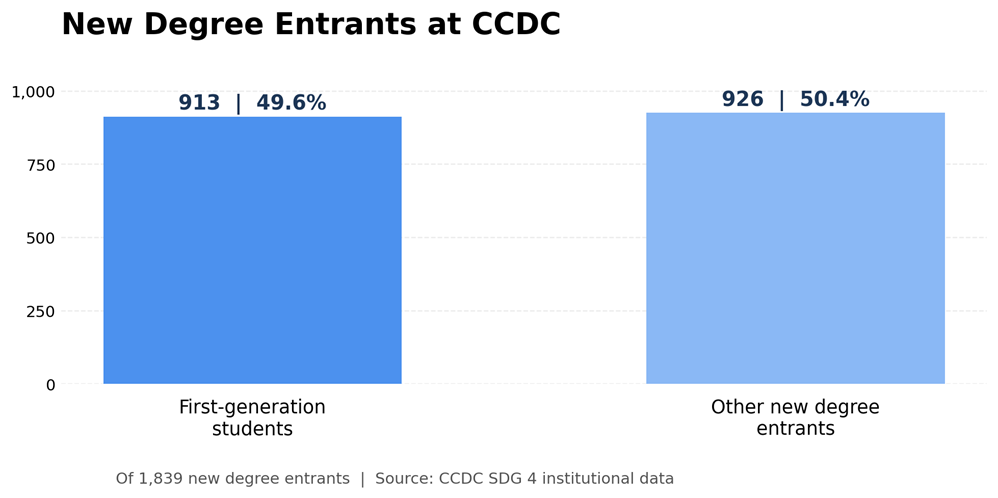
Access to degree education is central to CCDC’s contribution to inclusive learning. Institutional data record 1,839 students beginning a degree, of whom 913 are first-generation students. This means approximately 49.6% of new degree entrants are the first generation in their families to pursue a degree, highlighting the importance of making higher education reachable for learners from different family and educational backgrounds. This statistic describes entrants, not the graduation or employment outcomes.
Preparing Future Educators
The College also contributes to the education sector by preparing graduates for teaching. Among 763 reported graduates, 14 gained qualifications entitling them to teach at the primary school level. This specific measure represents approximately 1.8% of all graduates; it should not be interpreted as the full number of graduates from teacher education or the total number qualified to teach at other levels.
Making Learning Resources Available to the Community
CCDC reports providing members of the public with opportunities to access educational resources beyond formal enrollment. These include free courses leading to certificates or awards, access to selected campus facilities and equipment, and online learning resources. By opening physical and digital resources, the College seeks to create more pathways for community members to learn, explore new interests, and develop useful competencies.
Bringing Lifelong Learning Into Public Spaces
Educational events open to the general public form another part of the College’s lifelong learning efforts. Public learning events and opportunities for continuing education help connect academic knowledge with practical community interests. Such initiatives underscore the role of the College not only as a degree-granting institution but also as a venue for ongoing learning and exchange.
Developing Vocational and Professional Skills
CCDC also reports vocational training and professional development opportunities for individuals outside its regular degree programmes. Through short courses and continuing education activities, the College promotes practical skill development and supports the idea that learning remains relevant throughout working and community life.
Taking Education Beyond Campus
The institution’s education outreach activities extend learning to local schools and communities through lectures, demonstrations, and other school-based or community engagements. These activities help bring educational experiences closer to people who may not ordinarily participate in campus-based programmes and create opportunities for collaboration between CCDC, schools, and community partners.
Keeping Learning Inclusive
An institutional policy on inclusive access to lifelong learning underpins these initiatives. The policy addresses equitable participation regardless of characteristics such as ethnicity, religion, disability, immigration status, or gender. Its inclusion in the College’s sustainability documentation reflects a commitment to reducing barriers to educational opportunity.
Sustaining a Culture of Learning for All
Together, these efforts show how CCDC approaches quality education as a continuing public responsibility: supporting first-generation learners, preparing future teachers, opening educational resources, offering vocational opportunities, and engaging communities beyond the campus. As these programmes continue, documenting participant numbers, learning achievements, and community feedback will help demonstrate their longer-term benefits.
