

Cordillera Career Development College (CCDC) continues to advance gender equality by strengthening opportunities for women to enter, participate in, and complete higher education. Through student support, inclusive policies, leadership opportunities, and family-friendly services, the College seeks to make its learning and working environment more responsive to the needs of women and families.
Opening Doors to Higher Education for Women
CCDC reports 1,050 women beginning a degree during the institutional reporting period. Of these, 330 were first-generation women students, representing 31.4% of female degree entrants. These figures reflect the importance of expanding opportunities for women whose families may have limited previous experience of higher education. The data describes new entrants, rather than eventual completion outcomes.
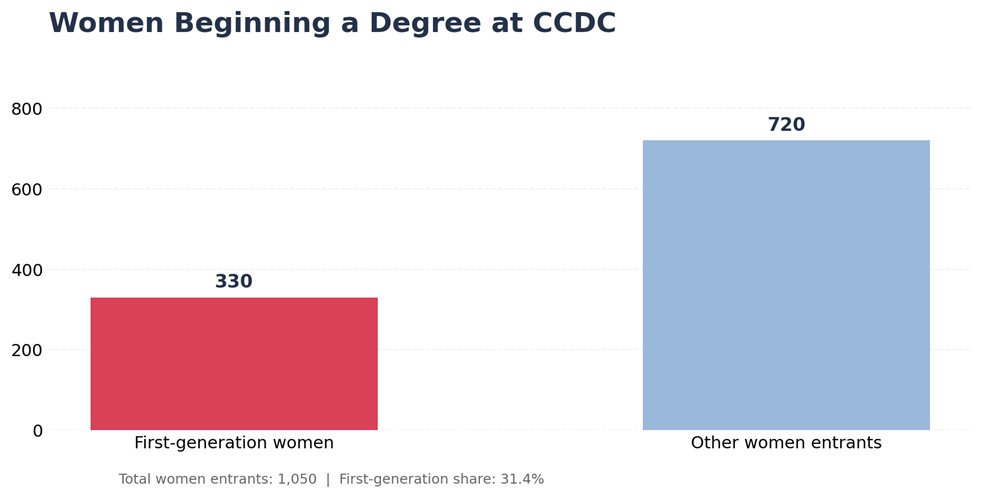
The College reports tracking women’s applications, admissions, and entry into higher education. Its open-admission and gender-responsive policy framework, together with mentoring, scholarships, and other support arrangements, is intended to help women participate in academic life. CCDC also reports outreach encouraging women to pursue fields in which they have historically been underrepresented, including criminology.
Supporting Women’s Academic Achievement
Women accounted for 378 of the College’s 763 reported graduates, or approximately 49.5%. Among the subject categories recorded, 172 women graduated in STEM-related programmes and 206 in arts, humanities, or social sciences. The data records no graduates in its separate medicine category. These figures provide a snapshot of degree completion, not a measure of retention or graduation rates by entering cohort.
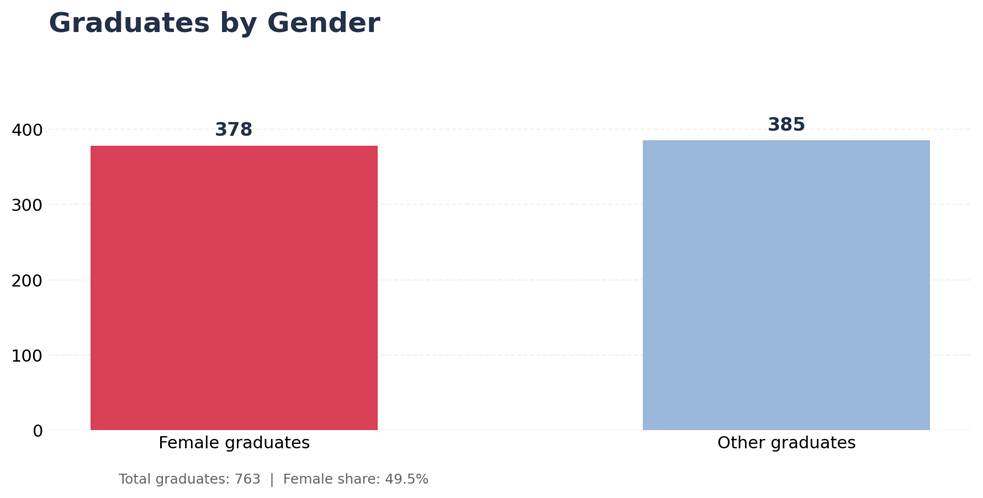
CCDC also reports monitoring women’s graduation outcomes alongside those of men and maintaining support mechanisms intended to address disparities. Sustained attention to advising, mentoring, and learner assistance helps reinforce the College’s commitment to equitable academic success.
Women in Academic Leadership
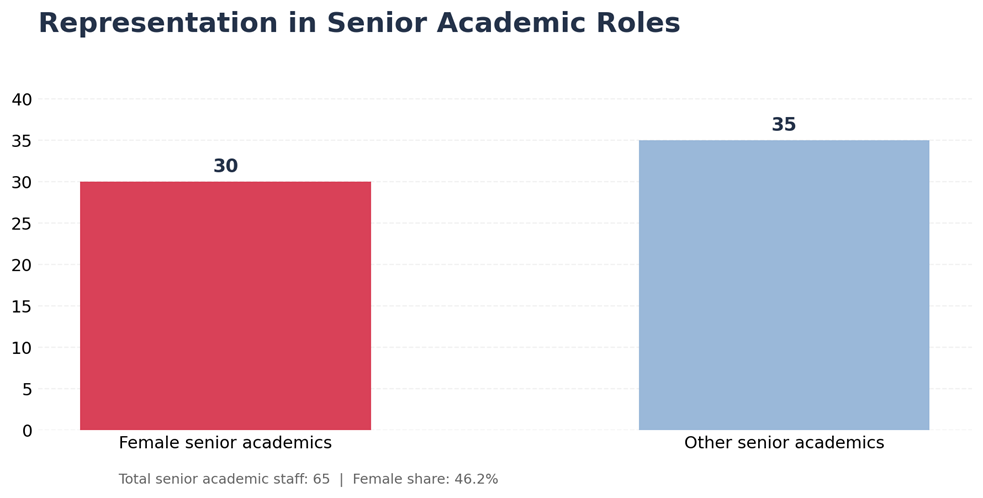
Representation in senior academic positions is another dimension of institutional gender equality. Of 65 senior academic staff reported, 30 were women, equivalent to 46.2%. This measure provides a useful baseline for monitoring women’s participation in academic decision-making and leadership over time.
Building a Supportive Environment for Students and Employees
Gender equality also depends on the conditions that allow people to remain engaged in education and employment. CCDC reports policies addressing non-discrimination against women and transgender people, maternity and paternity provisions, and safeguards for individuals who report discrimination. These measures are intended to promote fair treatment, protect participation, and strengthen accountability within the institution.
The College also reports free childcare facilities available to students, faculty, and staff. For student mothers and working parents, access to childcare can help reduce practical barriers to attending classes, fulfilling professional responsibilities, and continuing their education or careers. CCDC additionally identifies mentoring opportunities for women as part of its wider support system.
Encouraging Participation in Underrepresented Fields
The College’s documented outreach to encourage women’s participation in criminology illustrates its efforts to challenge traditional patterns of programme choice. Such engagement can help broaden students’ awareness of academic and career options and encourage women to consider disciplines in which they have been less visible.
Sustaining Progress Toward Gender Equality
Taken together, CCDC’s initiatives show an institutional approach that links access to education with academic completion, representation in leadership, non-discrimination, and family-responsive support. Continued collection of disaggregated admissions, participation, completion, and leadership data will help the College assess progress and identify areas requiring further action. Gender equality is strengthened not only by opening doors, but also by ensuring that women have the support and opportunity to thrive after entering them.
