

By Solomon Sagandoy
5.3.1 – Tracking Access Measures
To support SDG 5, Cordillera Career Development College (CCDC) monitors women’s entry into higher education through enrollment records maintained by the Registrar’s Office. Comparing participation by sex across reporting years documents changes in women’s representation among incoming degree students.
An Information System Supporting Access Monitoring
CCDC’s information system dashboard displays male and female enrollment figures, providing the Registrar’s Office with a tool for monitoring student participation by sex. These figures support enrollment reporting and comparison across reporting periods. For entry monitoring, the relevant population is students starting a degree; an all-enrollee dashboard provides broader participation context.
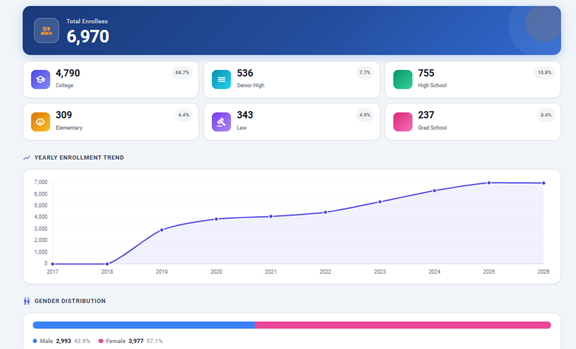
Figure 1. Sample overall dashboard showing enrollment by sex
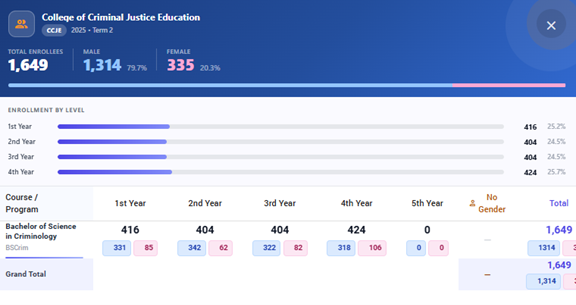
Figure 2: Sample dashboard showing gender distribution in a specific program
A Regular Process for Monitoring Access
For every admission cycle, the Registrar’s Office consolidates sex-disaggregated degree-entry records, calculates women’s share of entrants, and compares the results with previous years. Findings are reviewed with the concerned offices to inform outreach and student support planning.
Women’s entry share is calculated as female degree entrants divided by total degree entrants for the same reporting period, multiplied by 100. CCDC follows an open admission policy and does not maintain a separate application-stage dataset. This report therefore presents entry measures rather than application or acceptance rates.
Women’s Entry in 2024 and 2025
CCDC’s degree-entry records show that women constituted the majority of incoming students in both reporting years. The table presents the counts and corresponding shares of female and male entrants.
| Year | Female | Male* | Total entrants | Female share | Male share |
| 2024 | 814 | 541 | 1,355 | 60.07% | 39.93% |
| 2025 | 1,050 | 789 | 1,839 | 57.10% | 42.90% |
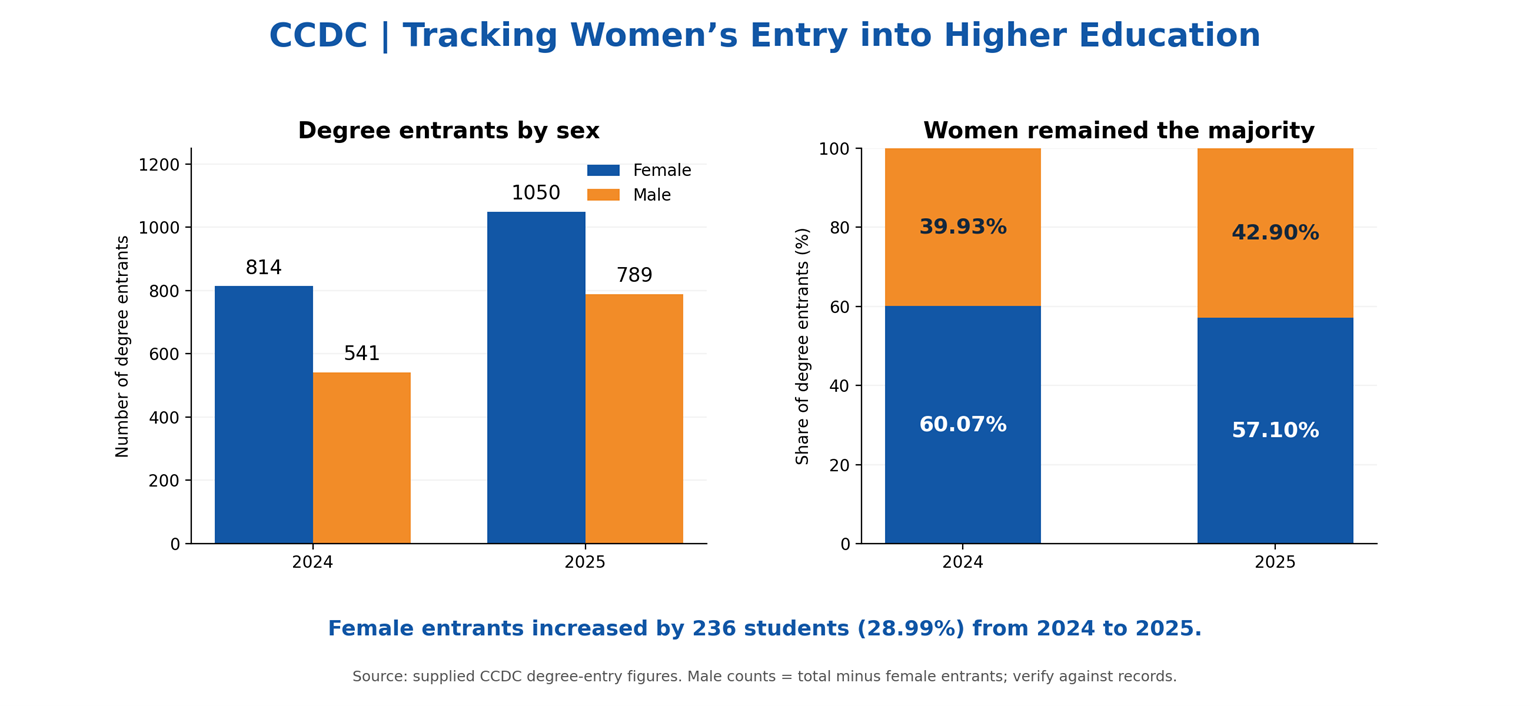
Figure 3. Degree-entry counts and percentage shares by sex, 2024–2025
Female entrants increased by 236 students, or 28.99%, while male entrants grew by 248 students, or 45.84%. The higher male growth rate partly reflects the smaller male enrollment base in 2024. Women’s share decreased by 2.97 percentage points because of this difference in growth, rather than a reduction in the number of women entering CCDC.
Women continued to constitute the majority of incoming degree students, accounting for 57.10% in 2025. The figures therefore show increased entry among both women and men. Tracking both counts and percentages enables CCDC to distinguish growth in participation from changes in the composition of entrants. These findings are used by respective departments as their basis for reviewing the program-level patterns and guiding career guidance, outreach, and student support that they implement every school year.
