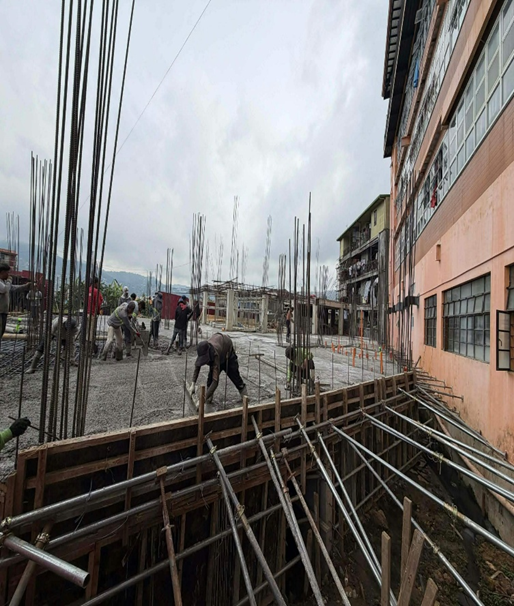

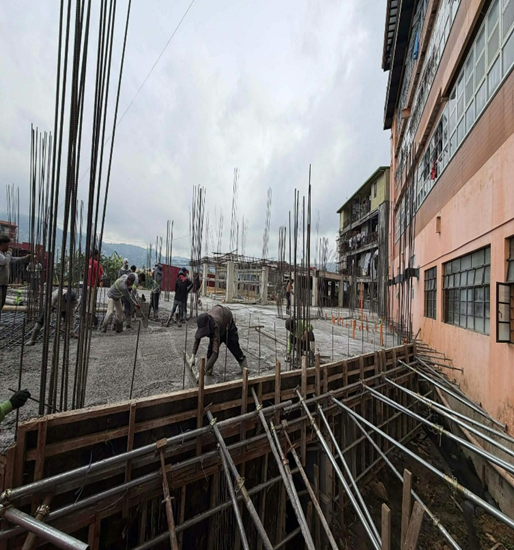
The Cordillera Career Development College (CCDC) has officially commenced the construction of its new Sewage Treatment Plant (STP) at Buyagan, Poblacion, La Trinidad, Benguet, marking a significant milestone in institutional sustainability and green infrastructure. Engineered by ArkGen Engineering and Construction Services, the ongoing civil works represent a proactive step toward aligning the college’s operations with UN Sustainable Development Goal 11 (SDG 11): Sustainable Cities and Communities.
Currently in its active building phase—marked by foundational concrete pours and structural rebar framing right next to campus buildings—this STP will be fully operational by 1st quarter of 2026, establishing a highly efficient system specifically designed to intercept and purify wastewater generated on-site.
By cleansing wastewater directly at the source, this centralized facility provides immediate public health and environmental dividends to the fragile La Trinidad valley ecosystem. It advances by securing safe, hygienic sanitation services for the entire campus community, eliminating risks associated with waterborne diseases like cholera and dysentery.
Furthermore, the STP stands as a vital defense line for the local environment, actively stripping out heavy nutrient loads like nitrates and phosphorus to prevent toxic algal blooms and aquatic suffocation. This rigorous sanitation cycle keeps untreated biological waste completely out of the severely polluted Balili River network, which directly safeguards downstream agricultural safety for valley farmers who depend on clean irrigation for vulnerable local crops like strawberries and salad vegetables.
Beyond immediate pollution control, the independent facility acts as a long-term buffer against environmental degradation and climate shocks. By modernizing waste management, CCDC eliminates subterranean septic leaks that saturate ground systems, protecting the local water table and enhancing overall soil stability in mountainous terrain. It also strengthens campus climate resilience by paving the way for a circular water economy, allowing the institution to reuse high-quality treated effluent for non-potable demands like landscaping and routine maintenance. Ultimately, CCDC’s new STP acts as both a regulatory compliance mechanism and a live educational model for sustainable engineering, showing how higher education can lead the transition toward clean, resilient, and forward-thinking urban spaces.