

Access to sufficient, nutritious, and affordable food is essential to the health, well-being, and productivity of students and employees. Recognizing that food insecurity can affect students’ academic performance and employees’ welfare, Cordillera Career Development College (CCDC) implements measures to help prevent and alleviate hunger within the College community. These interventions reflect the institution’s commitment to the United Nations Sustainable Development Goal (SDG) 2: Zero Hunger.
CCDC’s approach to food security combines affordable campus food, emergency food assistance, and community-based food production. Through these initiatives, the College seeks to address immediate food needs while promoting sustainable practices that improve access to nutritious food.
Keeping Campus Food Affordable and Accessible
CCDC helps students and employees access affordable meals by regulating the prices of food sold by campus canteen concessionaires. Price provisions are incorporated into annual contracts of lease and monitored by the College’s Business Office. This measure helps keep campus food reasonably priced, particularly for students and employees managing limited household resources.
Complementing this preventive measure, CCDC recognizes the need for direct food assistance when financial difficulties, emergencies, or other circumstances limit access to regular meals. Its food assistance and relief efforts provide support to members of the College community during situations that may disrupt their access to food.
Operation Kajo: Providing Food Assistance During Emergencies
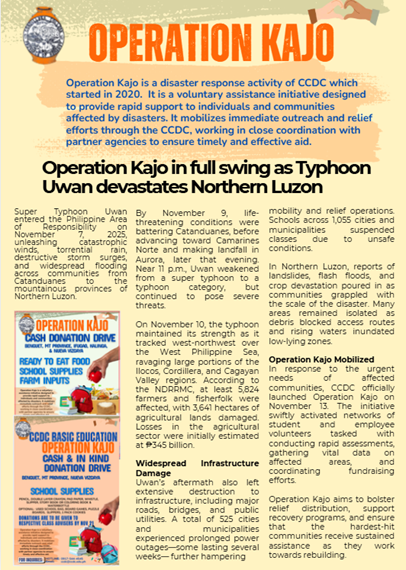
CCDC’s Operation Kajo, a disaster-resilience initiative, serves as a mechanism for responding to urgent food needs during emergencies. Through the provision of food packs and coordination with government agencies, the initiative helps address food insecurity when severe weather and other disasters disrupt access to essential supplies.
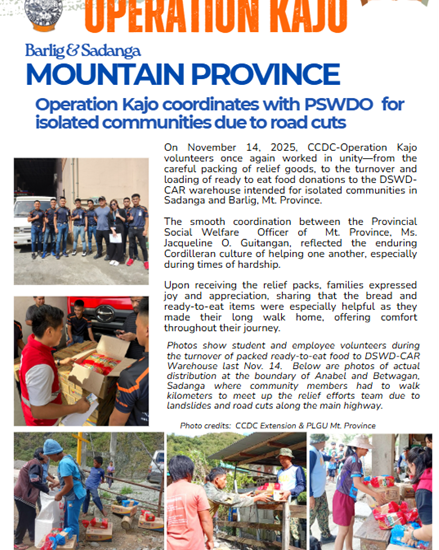
On September 23, 2025, following the effects of Typhoon Nando, CCDC activated Operation Kajo to assist students stranded on campus. A total of 128 students and staff received food packs containing 1.5 kilograms of rice, canned goods, noodles, and cookies. The assistance helped provide immediate food supplies to students who were unable to return home because of the typhoon.
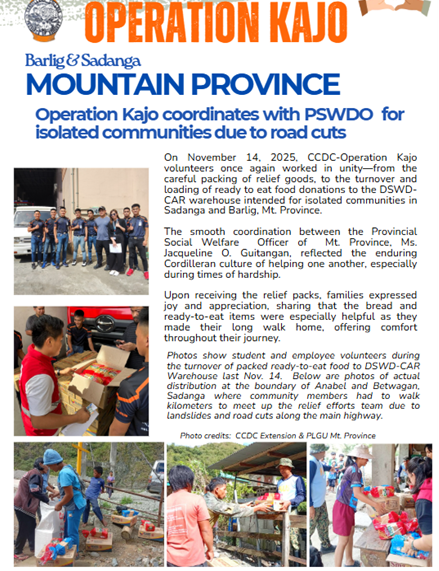
On November 14, 2025, following a series of typhoons that affected Northern Luzon, CCDC again mobilized Operation Kajo. In coordination with government agencies, the College facilitated the provision of ready-to-eat food to isolated communities in Barlig and Sadanga, Mountain Province, where access to essential supplies had been disrupted.
These responses demonstrate CCDC’s capacity to mobilize food assistance during emergencies, addressing immediate hunger among affected students and extending support to vulnerable communities.
Promoting Community Gardening for Sustainable Food Security
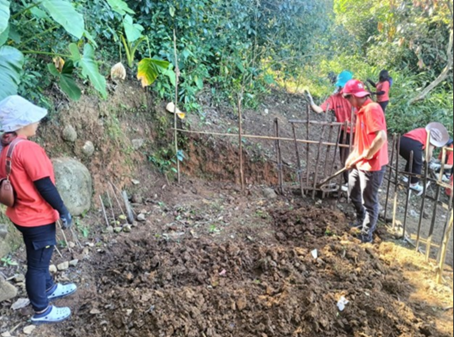
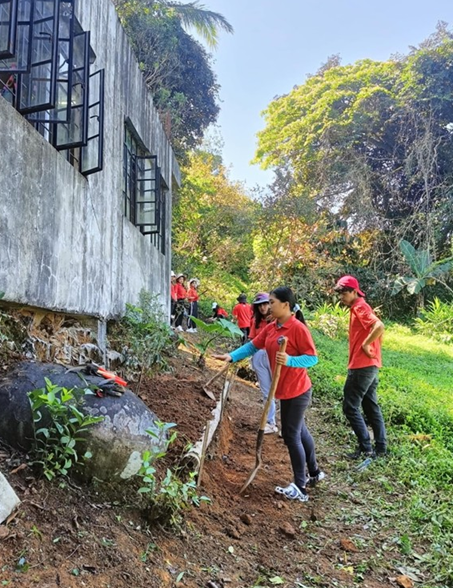
Beyond immediate food assistance, CCDC supports community-based initiatives that promote the sustainable production of nutritious food. In partnership with the Department of the Interior and Local Government (DILG), the College participates in the Halina’t Magtanim ng Prutas at Gulay sa Barangay (HAPAG) Project through its Hopeful Hand Allies: Community Gardening initiative.
The program engages students under the National Service Training Program (NSTP-2), faculty members, and community residents in urban and backyard gardening. By encouraging households to grow vegetables and other food crops, the initiative promotes practical ways of improving access to fresh produce and reducing dependence on purchased food.
On March 15, 2025, the initiative planned planting activities for pechay, string beans, and taro at the Day Care Center in Sitio Chagao and at the head center and elementary school in Sitio Bangho, Barangay Bangho, Daklan, Tublay, Benguet.
According to Mercidonna Alos, a Barangay Kagawad of Bangho, the community initiative seeks to expand communal gardens near the health center and extend gardening activities to puroks and nutritionally at-risk households. These efforts aim to strengthen household food security, help address malnutrition, and encourage greater self-sufficiency.
Through community gardening, CCDC contributes to a broader approach to hunger prevention that emphasizes food availability, affordability, and sustainable local food production.
Strengthening Food Security Within the College Community
CCDC’s measures to keep campus food affordable, provide emergency food assistance, and promote community gardening demonstrate its commitment to addressing hunger through both preventive and responsive interventions. These efforts recognize that food security is an important part of creating a supportive learning and working environment.
The College can further strengthen its student food security program by ensuring that students and employees experiencing food insecurity can access essential food supplies through organized food pantries or food banks, supported by institutional resources, donations, and partnerships. Such mechanisms can complement existing initiatives by providing timely assistance to individuals who may otherwise struggle to afford regular meals.
By integrating affordable food access, emergency relief, and sustainable food production into its institutional and community initiatives, CCDC advances the goals of SDG 2: Zero Hunger. Its efforts affirm that supporting education and employee welfare also means recognizing and responding to the basic nutritional needs of the people who learn, work, and serve within the College community.
