

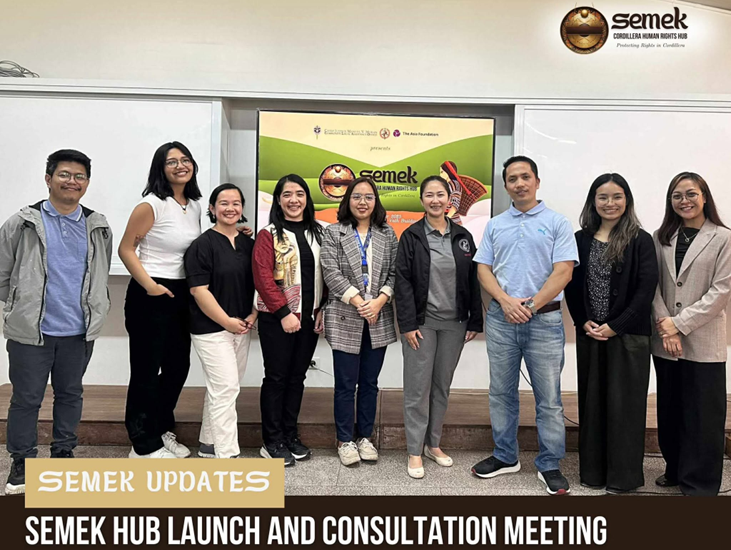
In its continuous pursuit of responsive and community-centered legal education, the Cordillera Career Development College – College of Law (CCDC-COL) has strengthened its community engagement through its active membership in the SEMEK Cordillera Human Rights Hub.
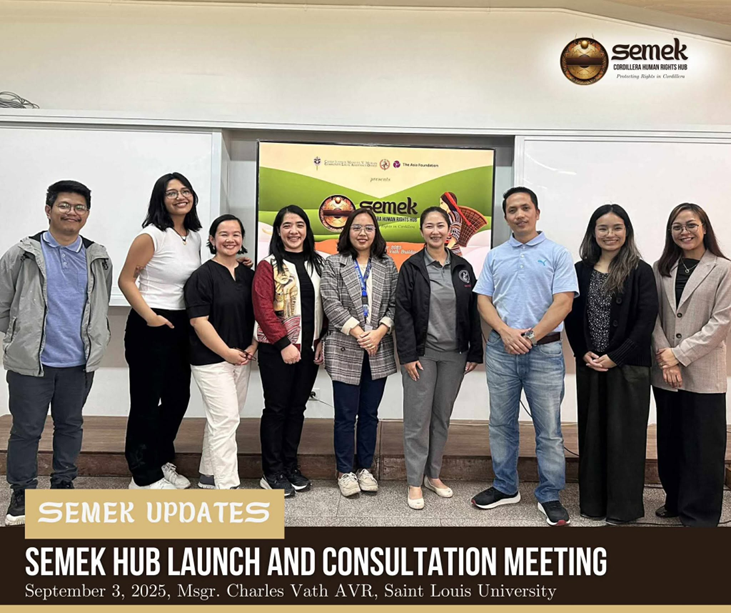
Officially launched during a milestone gathering at Saint Louis University on September 3, 2025, the Hub unites academic institutions, government agencies, and civil society organizations, including the CCDC – College of Law’s Community Legal Aid Center (CCDC CLAC), the Commission on Human Rights – Cordillera (CHR-CAR), the Cordillera Women’s Education Action Research Center (CWEARC), and the CJ Manuel V. Moran Community Legal Assistance Office (CJMM CLAO) as Convenor, with support from The Asia Foundation.
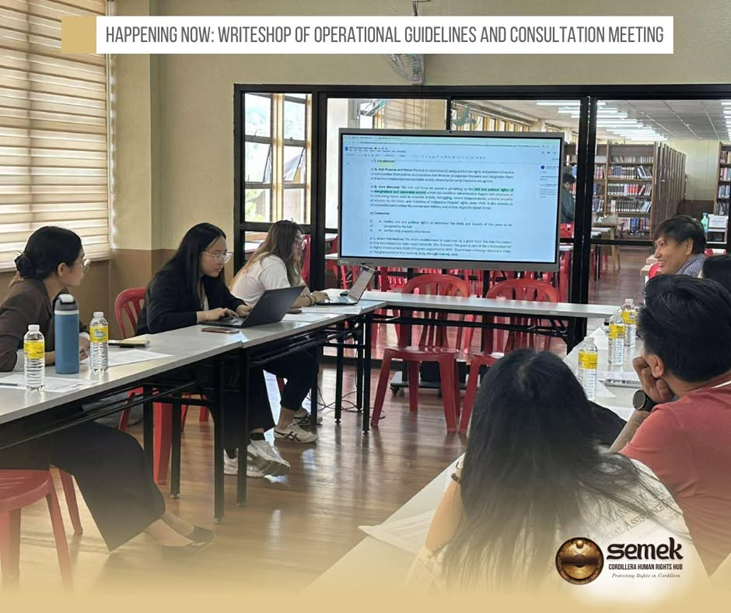
More than an alliance, the SEMEK Hub provides a vital participatory mechanism and consultation platform for stakeholders outside the school, including local community advocates, marginalized sectors, and regional human rights organizations, to directly shape how CCDC College of Law operates its legal aid centers and programs. Through structured institutional consultations and collaborative writeshops, such as the Operational Guidelines and Consultation Meeting held on October 15, 2025 at Saint Louis University, external stakeholders actively collaborate with academic legal practitioners to review, co-design, and refine institutional outreach and legal aid frameworks, enabling CCDC to directly align its community programs with the specific needs and gaps identified during these consultations. This multi-sectoral dialogue ensures that CCDC’s legal aid initiatives are directly responsive to the actual realities, legal gaps, and justice needs of local communities across the Cordillera Administrative Region.
Guided by its multi-stakeholder governance framework, the Hub operates under clear, foundational objectives that direct its day-to-day community work:
- the facilitation of access to justice
- strengthening coordination and referral mechanisms
- the protection of marginalized and vulnerable sectors
- the promotion of human rights education, community empowerment
- the support for clinical legal education and advocacy formation
- the advancement of research, documentation, and policy development to ensure ethical, trauma-informed, and inclusive services; and
the strengthening of local and regional human rights protection systems across the Cordilleras.
