

Cordillera Career Development College (CCDC) advances Sustainable Development Goal 1: No Poverty by widening access to higher education, supporting students experiencing financial disadvantage, and connecting institutional expertise with community livelihood and basic-service initiatives. The college’s 2026 SDG 1 reporting data demonstrate the scale of financial assistance and document a range of institutional anti-poverty commitments.

Making higher education financially accessible
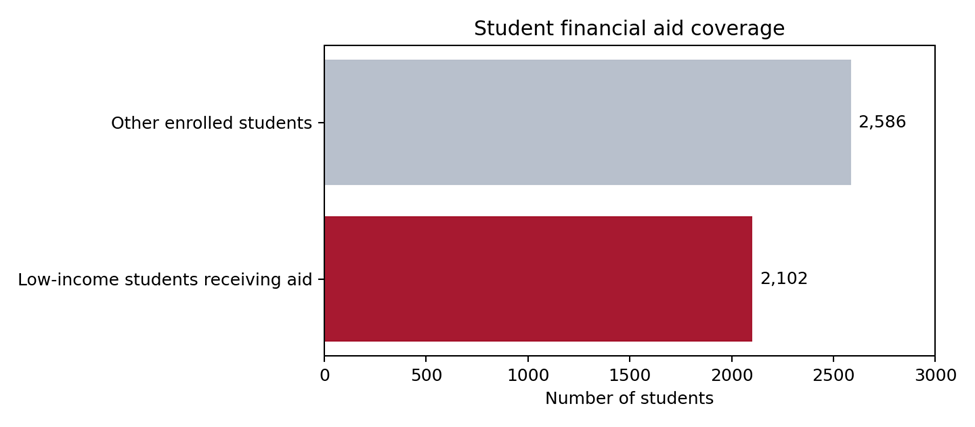
Of 4,688 students recorded, 2,102 were identified as low-income students receiving financial aid. This represents 44.8% of the student population. The figure illustrates the substantial role of financial assistance in enabling access to CCDC education; it does not, by itself, measure changes in household poverty or graduation outcomes.
Supporting admission, persistence and completion
CCDC reports an admission target for students from the bottom 20% of the household-income distribution and a corresponding graduation or completion target. The institution also reports free and subsidized support for low-income learners and initiatives directed at students in the bottom income quintile. These approaches recognize that access to education must be matched by practical support throughout the student journey. The reporting records these measures as present, but does not supply numerical admission, retention or completion results for independent calculation.
Connecting education to community livelihoods
Beyond the campus, CCDC reports assistance to local start-ups through education and resources, alongside financial support and opportunities for sustainable community enterprises. Such interventions aim to strengthen entrepreneurship, livelihood opportunities and community economic participation. The reports record the existence of these initiatives but do not provide beneficiary counts, disbursement amounts or business survival outcomes.
Improving access to services and contributing to policy
The institution reports direct and indirect programmes intended to improve access to basic services, including community-oriented health, education and legal support. It also reports engagement in poverty-related policy development at local, regional, national and global levels. These activities connect the college’s educational and professional capacities with wider efforts to reduce disadvantage.
Priorities for stronger impact measurement
For subsequent reporting cycles, CCDC can strengthen its public evidence by disaggregating aid recipients by assistance type and academic programme; publishing verified admission and graduation outcomes for bottom-quintile learners; recording numbers of community beneficiaries and enterprises supported; and comparing results across reporting years. Such measures will help distinguish programme availability from demonstrated impact.
