

Cordillera Career Development College (CCDC) supports community resilience by extending disaster preparedness education, safety training, environmental awareness, and risk-reduction activities beyond the campus. Through its community extension programs, student-led initiatives, graduate school capability-building activities, and partnerships with local government units and public safety agencies, the College helps learners and community members develop practical knowledge and skills to prepare for emergencies and reduce disaster impacts.
These initiatives are particularly relevant to Benguet, where heavy rainfall, typhoons, flooding, and landslides can threaten communities, agricultural livelihoods, infrastructure, and access to education. CCDC’s documented activities demonstrate how education and community engagement can help people understand hazards, prepare for emergencies, and strengthen local capacity to recover from disasters.
Educational programs and campaigns supporting climate resilience
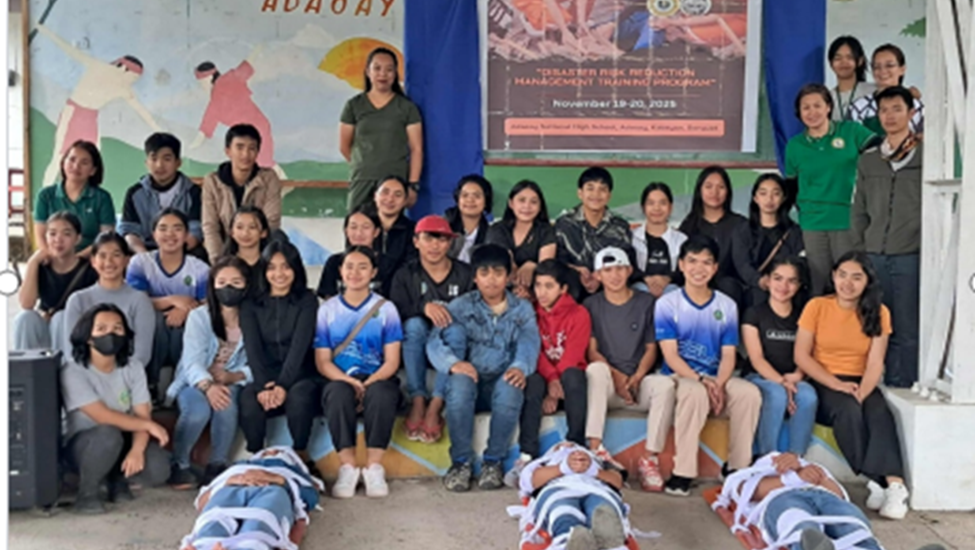
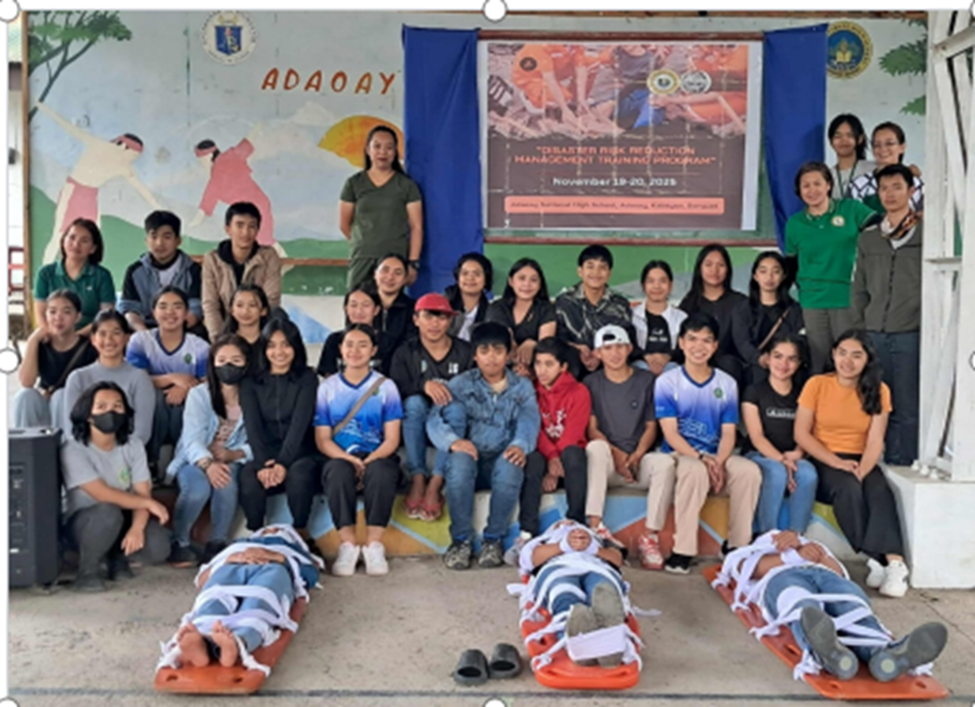
1. Graduate School CaRE Program: Disaster Risk Reduction and Management Capability Training
November 19–20, 2025 | Adaoay National High School, Kabayan, Benguet
CCDC graduate students conducted a two-day Disaster Risk Reduction and Management (DRRM) capability program for teachers and students. Activities included cardiopulmonary resuscitation (CPR), fire safety instruction, proper fire extinguisher use, and earthquake and fire drills facilitated with the Bureau of Fire Protection.
The program provided practical opportunities for participants to learn emergency response procedures and apply safety knowledge through demonstrations and drills. These skills can help reduce injuries and improve community readiness during emergencies.
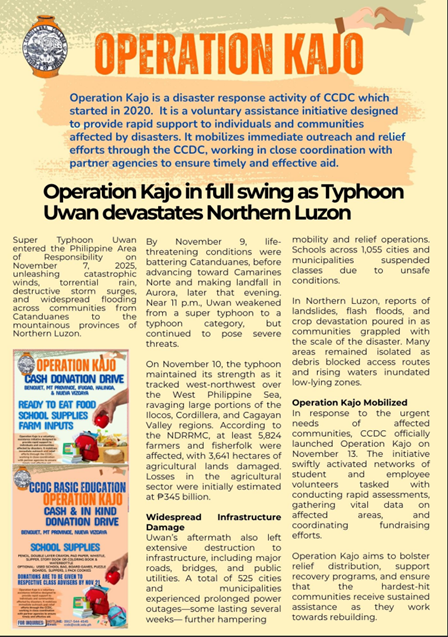
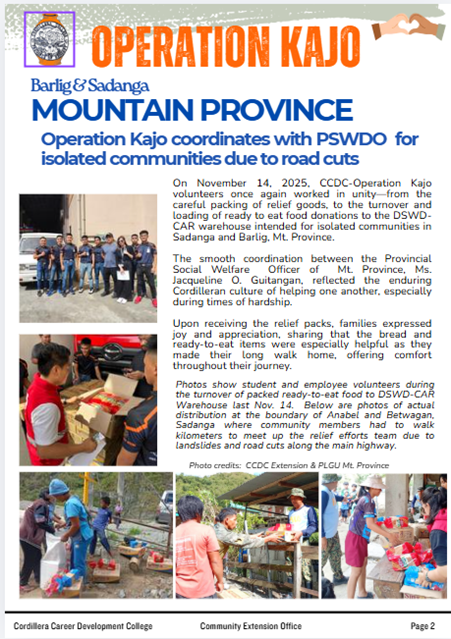
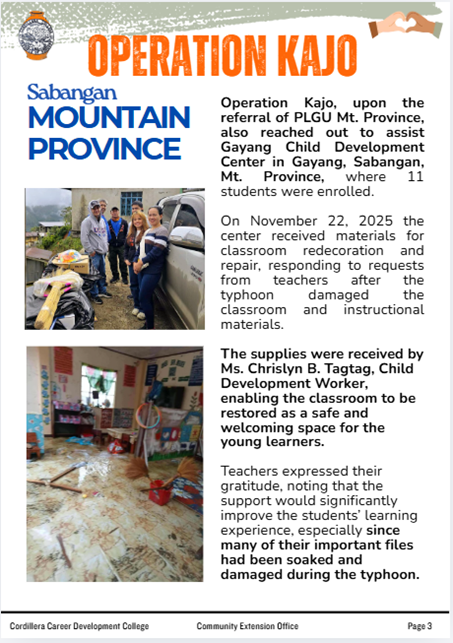
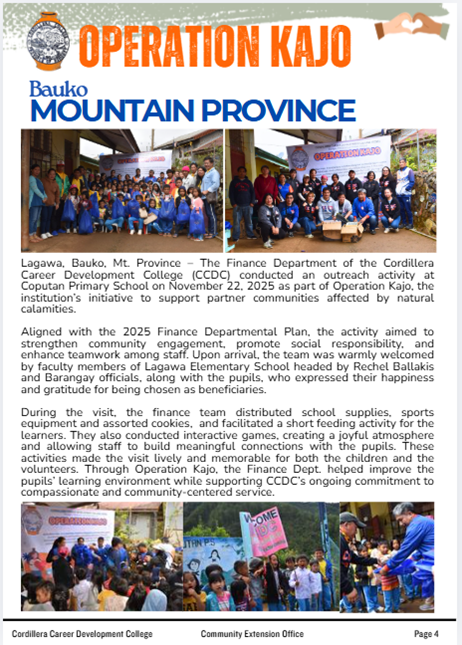
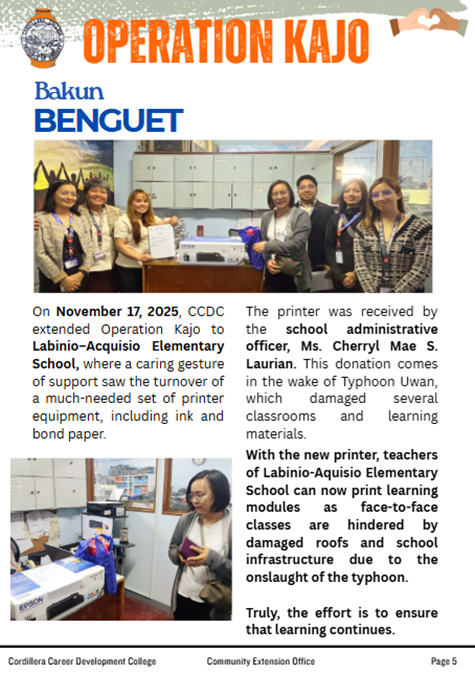
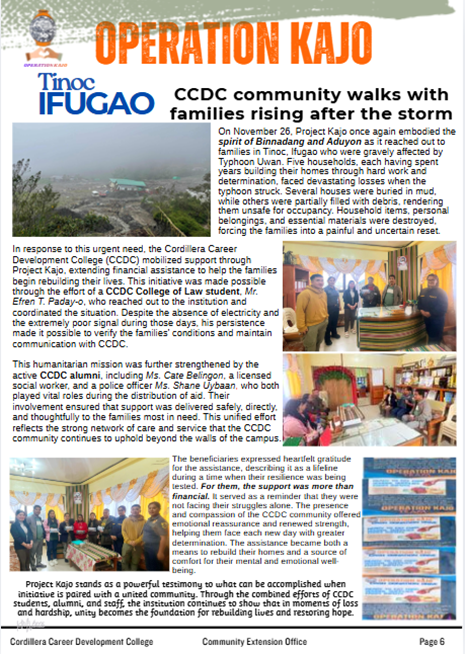
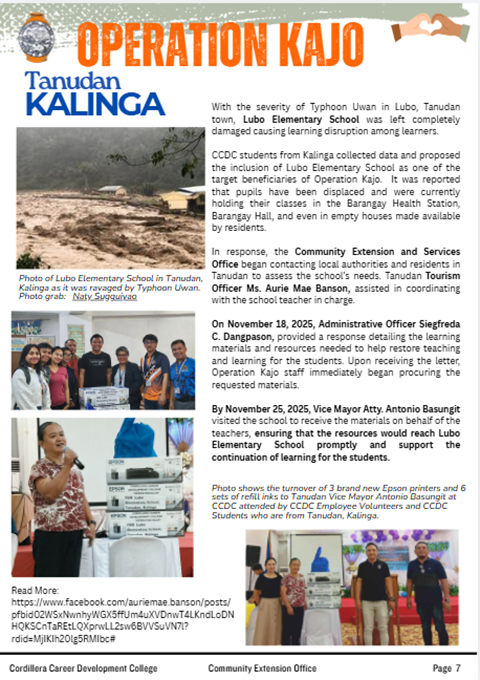
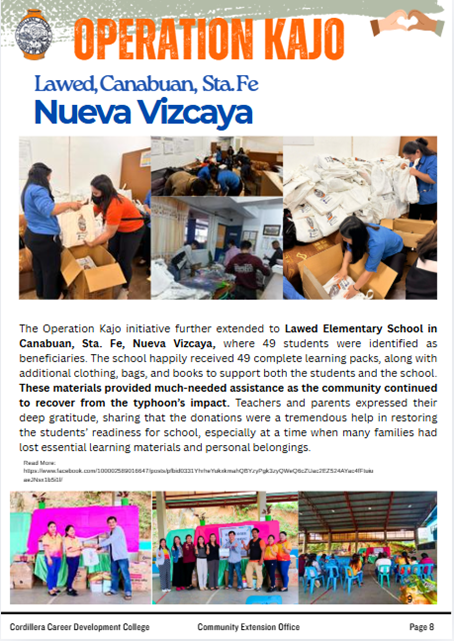
2. Operation Kajo: Disaster Response and Recovery
3. Research and local government collaboration on disaster risk reduction and sustainable development
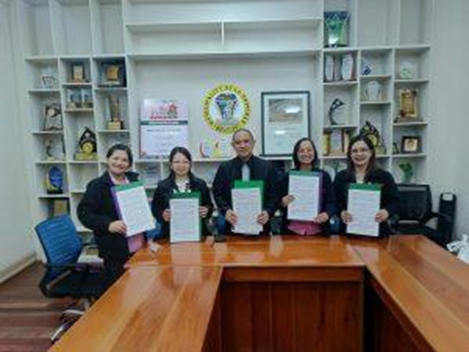
CCDC’s partnership with the Local Government Unit of La Trinidad includes research and development in areas such as disaster risk reduction and management, public safety, and sustainable development. The partnership aims to produce evidence that can inform local policy and program implementation.
This collaboration is relevant to climate resilience because local research can help communities and decision-makers understand their vulnerabilities and identify suitable risk-reduction measures.
4. Environmental Education through Greening Initiative
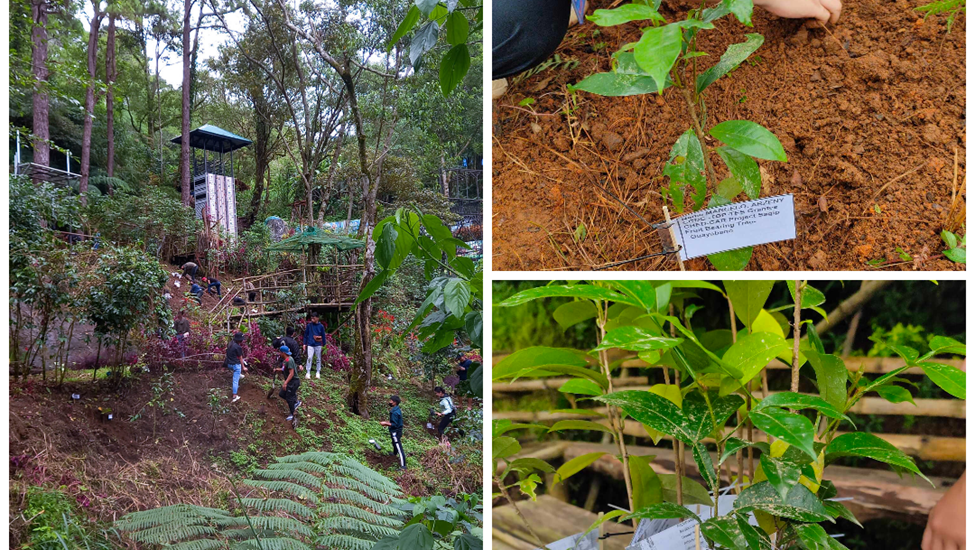
La Trinidad, Benguet — Cordillera Career Development College (CCDC) has reinforced its commitment to sustainable land use and environmental education through Project SAGIP (Scholars and Grant-in-Aid Beneficiaries Action in Greening Initiative Program), highlighted during a site visit at the CCDC Admirals Farm Park on May 14, 2025.
The activity was documented in a CHED-UniFAST Cordillera news article published on May 19, 2025, which reported on the progress of the greening initiative.
During the visit, participants observed the results of tree-planting efforts under the program. About 300 seedlings — including avocado, coffee, mango, and pine — were planted at the farm park. Several of the seedlings have thrived, with coffee plants already showing signs of success by sprouting beans.
Project SAGIP encourages each financial assistance grantee to plant at least one indigenous or fruit-bearing tree annually throughout their grant period. The program not only contributes to reforestation but also fosters a deeper sense of environmental accountability among students.
The report noted that the initiative supports reforestation and environmental sustainability and helps nurture responsible, environmentally conscious citizens. By engaging students in hands-on conservation activities, CCDC promotes the sustainable utilization of land, including forests and wild land areas, within its academic and community programs.
CCDC also maintains a partnership with the Department of Environment and Natural Resources (DENR) for tree-planting and waste management programs, as reflected in the college’s sustainability report for Academic Year 2023–2024. These projects remain ongoing and continue to support the institution’s broader commitment to land stewardship, environmental conservation, and sustainable practices.
The Project SAGIP site visit and tree-planting activity serve as a concrete example of CCDC’s role in organizing and supporting events that advance land ecosystem conservation through education.
5. Canal-Clearing Activity for Flood Risk Reduction
November 8, 2025 | Buyagan Road, La Trinidad, Benguet
Twenty CCDC Criminology Practicum 1 interns conducted canal-clearing activities ahead of the anticipated effects of Typhoon Uwan. By removing obstructions from waterways, the students helped improve drainage conditions and reduce potential flooding risks.
The initiative illustrates how community education can translate into preventive action. It reinforces the importance of maintaining drainage systems, keeping waterways free of waste, and recognizing the relationship between environmental management and disaster risk reduction.
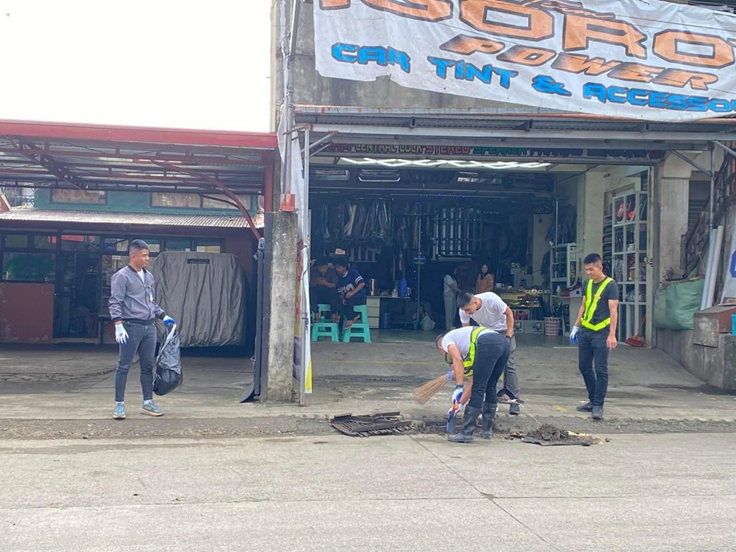
Twenty CCDC Criminology interns participate in canal-clearing activities along Buyagan Road on November 8, 2025, supporting community preparedness and environmental safety.
